You fill a glass from the kitchen tap and it smells faintly of chlorine. Or you notice a chalky white film on your shower door every week. If you have lived in a San Diego home for a few years, this probably sounds familiar. San Diego’s tap water is safe to drink, but it carries characteristics that affect how it tastes, feels, and behaves in your plumbing. That is why whole house water filter installation has become one of the most requested upgrades among San Diego homeowners in the last several years.
This guide covers everything you need to make a smart decision: what a whole house filter actually does, how San Diego’s local water conditions factor in, what different system types cost, how the installation works, and why this is one job where hiring a licensed plumber is worth every dollar.
What Is a Whole House Water Filter?
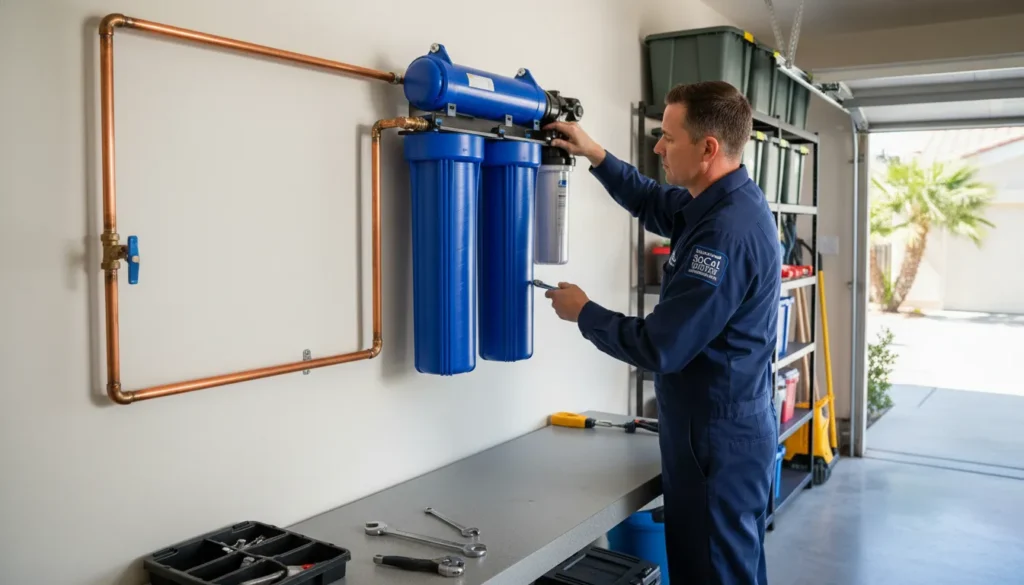
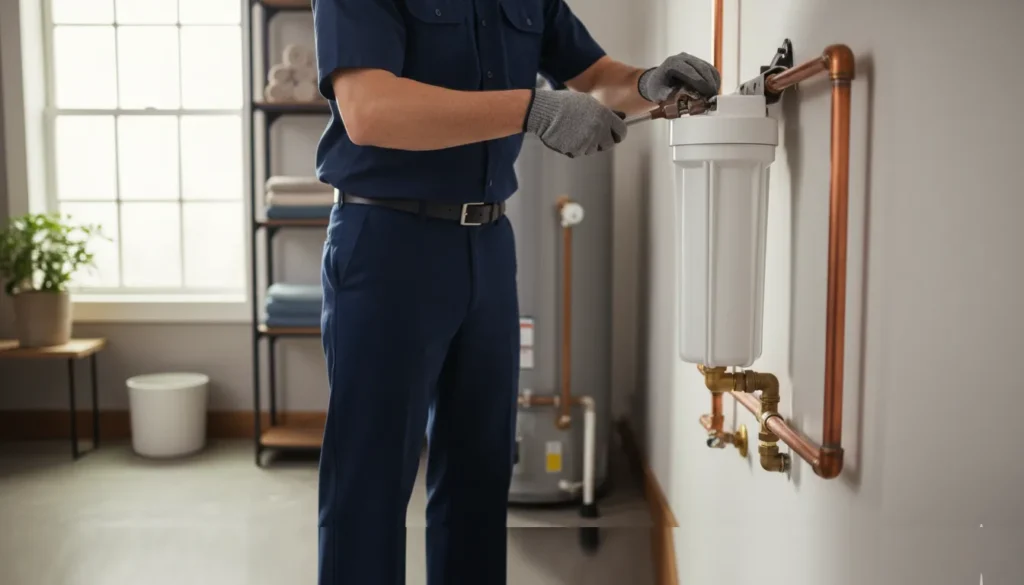
A whole house water filtration system installs at the main water line entering your home, typically near the water meter or where the supply line comes in from the street. Every faucet, shower, toilet, dishwasher, and appliance in the house then receives filtered water. The system stands in contrast to under-sink or pitcher filters, which treat only a single point of use.
Most whole house filters treat sediment, chlorine, chloramines, volatile organic compounds (VOCs), and certain heavy metals, depending on the system type and filter media. A well-chosen system protects your pipes, appliances, and fixtures from scale buildup while improving taste and odor throughout the entire home.
If you are also dealing with aging galvanized or copper pipes, a whole house filter pairs well with a whole house repipe for a complete water system upgrade.
How San Diego’s Water Affects the Decision
San Diego receives its water from two primary sources: the Colorado River and Northern California via the State Water Project. Both sources carry dissolved minerals that make San Diego one of the harder water cities in California. According to the City of San Diego Public Utilities Department, drinking water in San Diego averages about 16 grains per gallon (approximately 276 ppm), which places it well above the 60–120 mg/L range considered moderately hard.
The San Diego County Water Authority also uses chloramines — a combination of chlorine and ammonia — as a disinfectant. Chloramines are more stable than free chlorine and harder to remove with a basic filter. Standard carbon filters handle free chlorine well, but treating chloramines requires a catalytic carbon or higher-capacity carbon block filter. The EPA recommends activated carbon filtration as one of the most effective methods for removing chlorine, chloramines, and associated disinfection byproducts from residential water supplies.
Worth noting: Homes built between the mid-1970s and early 1990s in San Diego often have galvanized or copper pipes. Hard water accelerates scale buildup inside those pipes. A whole house filter paired with a water softener installation provides better protection against scale-related pipe deterioration over time.
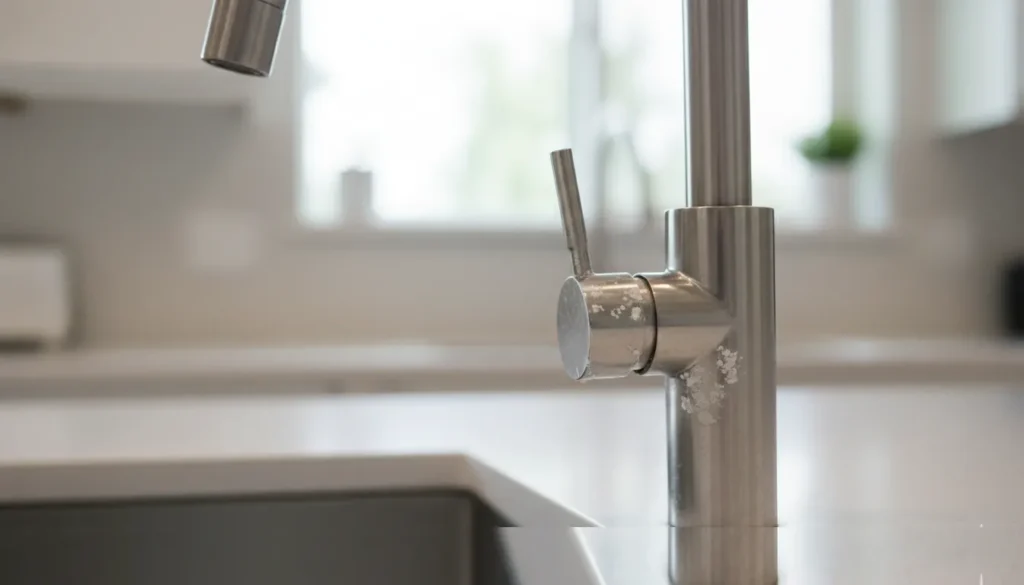
If your home is 10 to 30 years old, you may already be seeing signs of hard water: reduced water pressure, white mineral deposits around fixtures, and shortened appliance life. Filtering at the point of entry addresses all of these issues at once. A pressure regulator installation is worth checking at the same time, since high incoming pressure accelerates scale buildup and filter wear.
Types of Whole House Filter Systems
Not every home needs the same system. The right choice depends on your water test results, household size, and budget.
Sediment Filters
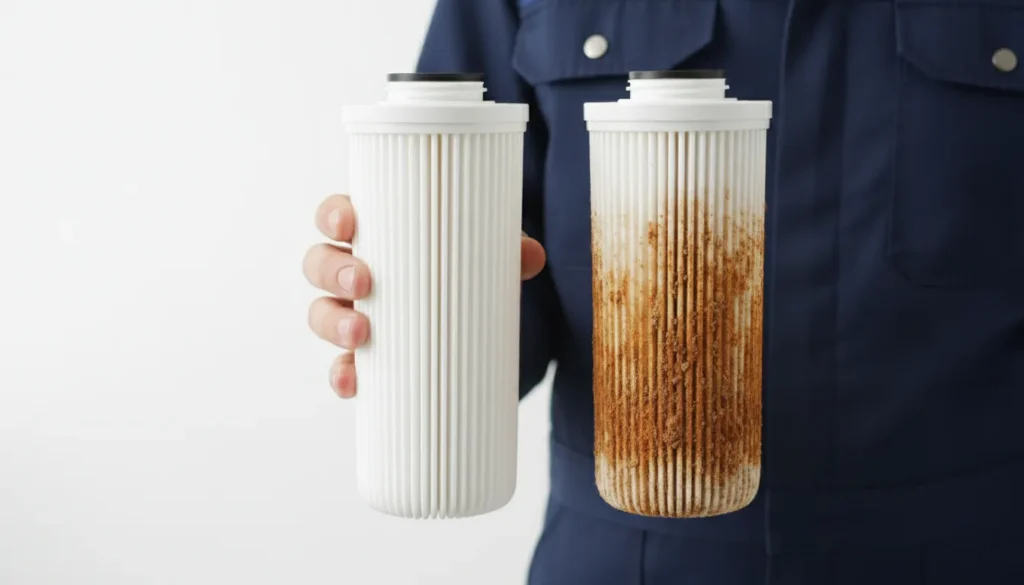
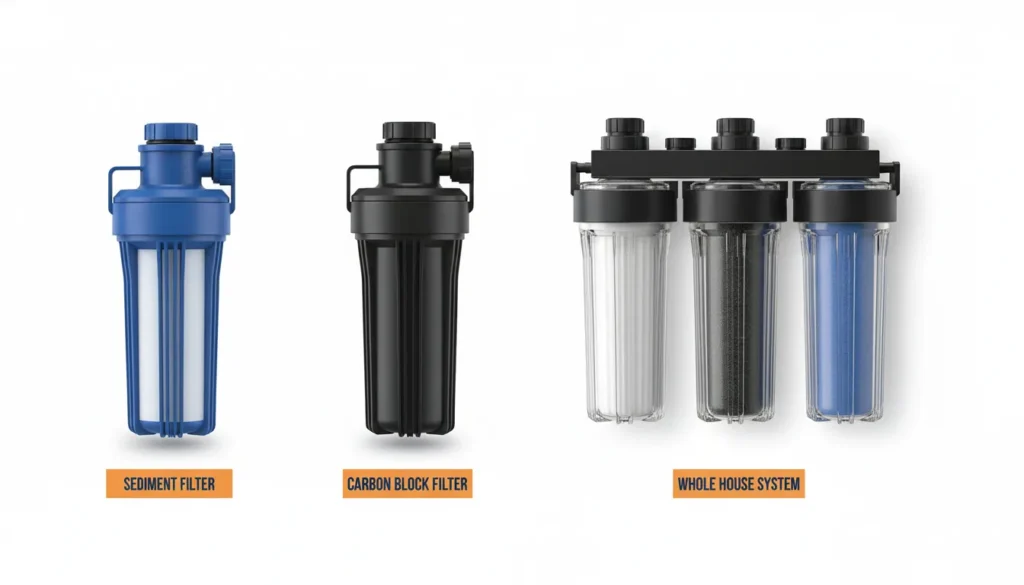
A sediment filter is often the first stage in a multi-filter setup, or it can stand alone in homes with well water or older supply lines. It traps particulates like sand, rust, and silt using a pleated or spun polypropylene cartridge. It does not address chlorine, hardness, or chemical contaminants on its own.
Carbon Block Filters
Activated carbon block filters are the most common single-stage solution for city water in San Diego. They reduce chlorine, chloramines (with catalytic carbon), chlorination byproducts, herbicides, pesticides, and many VOCs. They improve taste and odor noticeably and protect plumbing from chemical wear.
Multi-Stage Systems
A multi-stage system combines a sediment pre-filter, a catalytic carbon block, and sometimes a post-filter or specialty media stage targeting specific contaminants. These systems deliver the broadest protection and are a good fit for older homes or households with specific water quality concerns identified by a water test.
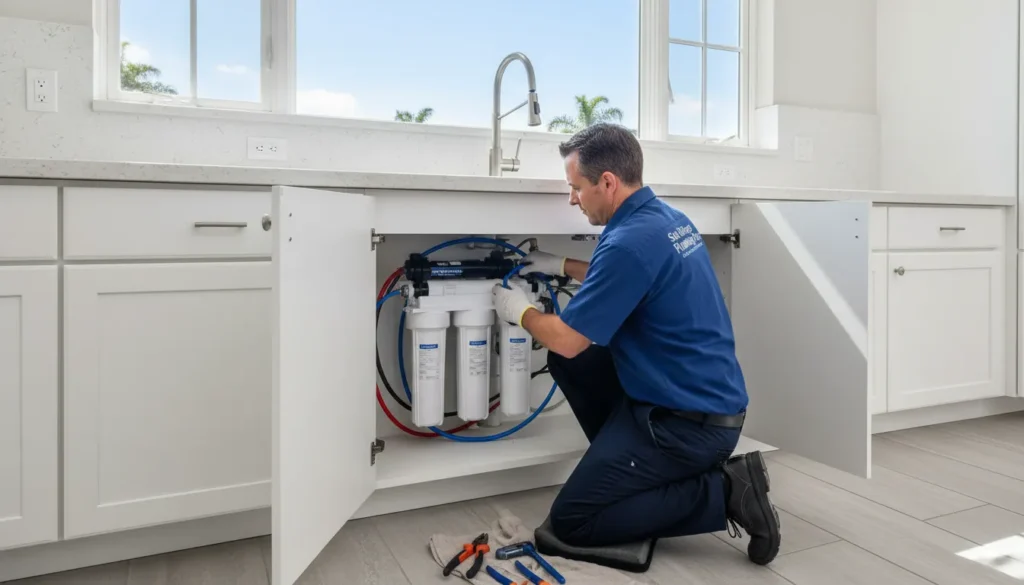
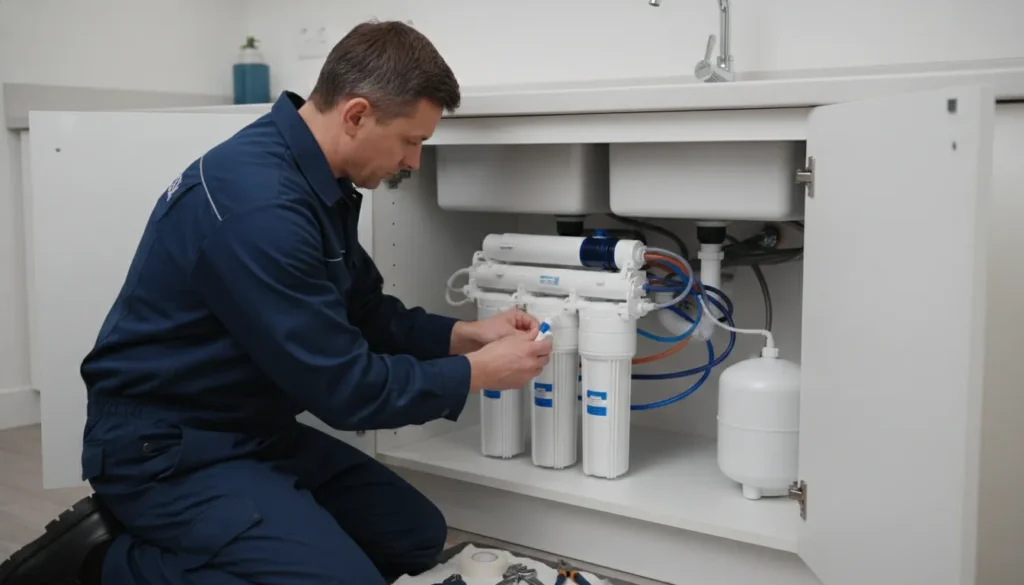
If your main concern is drinking water quality at a single tap rather than whole-home coverage, a reverse osmosis installation under the kitchen sink can complement or stand in for a whole house system.
Pro tip: If you are not sure what is in your water, request a copy of San Diego’s annual Water Quality Report from the City of San Diego Public Utilities Department. Better yet, have your water tested before purchasing a system so the filter media matches your actual contaminant load.
The Installation Process
A professional whole house water filter installation follows a consistent sequence. Here is what a standard residential install looks like:
Locate and shut off the main water supply. The plumber identifies the main shutoff valve and closes it before any pipe work begins.
Select the installation location. The filter housing needs to be placed where the main line enters the home, with enough clearance for cartridge access during future maintenance.
Cut into the main supply line. The plumber cuts the pipe, installs shut-off valves on both sides of the filter housing, and solders or threads the fittings depending on pipe material.
Mount the filter housing and install the cartridge. The housing is secured, the correct cartridge is loaded, and all connections are tightened and checked.
Restore water and test for pressure and leaks. The main supply is opened slowly, and the plumber checks every connection for leaks, then verifies that water pressure throughout the home is within normal range.
This same main line work is also the access point for other upgrades. Many homeowners schedule a water heater installation at the same time, since the plumber is already working at the supply line.
How Long Does Installation Take?
A straightforward whole house water filter installation typically takes two to four hours for a licensed plumber. Homes with tight utility spaces, older pipe configurations, or corroded existing fittings may take longer. Multi-stage systems with separate sediment and carbon housings add time. Plan for half a day if you are also adding a bypass valve or pressure gauge, both of which are worthwhile additions for long-term maintenance.
What Does It Cost in San Diego?
The total cost of whole house water filter installation in San Diego depends on the system type, pipe material, and access conditions. Below is a realistic cost range for labor and parts combined.
|
System Type |
Typical Cost Range (Parts + Labor) |
|---|---|
|
Single-stage sediment or carbon filter |
$350 – $650 |
|
Catalytic carbon block (chloramine treatment) |
$500 – $900 |
|
Multi-stage system (2 to 3 stages) |
$700 – $1,400 |
|
High-capacity whole home filtration system |
$1,200 – $2,500+ |
These ranges reflect San Diego market rates and include standard labor. Homes with copper pipes, concrete utility rooms, or limited access points at the main line may see labor costs at the higher end of each range. Contact Repipe Home Hero for a free estimate specific to your home.
Maintenance: What Happens After Installation?
A whole house water filter requires regular cartridge replacement to stay effective. Skipping maintenance does not mean the water stays the same. It means the filter becomes saturated and stops removing contaminants, and in some cases a clogged cartridge can cause a measurable drop in water pressure throughout the home.
General replacement schedules for San Diego conditions:
- Sediment pre-filters: Every 3 to 6 months, depending on sediment load
- Carbon block filters: Every 6 to 12 months
- High-capacity catalytic carbon: Annually for most households
The housings themselves, if maintained properly, last 10 years or more. Set a calendar reminder when you have the system installed. Cartridge costs are modest, typically $20 to $80 per stage per replacement cycle, making this one of the lower-maintenance home upgrades available.
If a neglected filter contributes to reduced pressure or you notice a drop in flow throughout the house, a pipe leak repair inspection is a good next step to rule out any related supply line issues.
Customer review: “We used Repipe Home Hero to repipe our entire house from copper to plastic, replace the main water line to the street, and install a whole home water filter. They did a great job and would definitely recommend them.”
Why Hire a Licensed Plumber for This Job
Whole house water filter installation is not a DIY project. The work requires cutting into a pressurized main water supply line and making leak-free connections that handle constant water pressure, 24 hours a day. A pinhole leak at that connection point can cause wall or floor damage that costs far more than the filter itself.
In California, any work on a residential water supply line requires a C-36 Plumbing Contractor license, issued by the California Contractors State License Board (CSLB). This is not a technicality. The license requirement exists because improperly installed plumbing creates long-term risks: water damage, mold, and code violations that complicate future home sales.
A C-36 licensed plumber also brings the tools and experience to size the filter correctly for your home’s flow rate, select fittings that match your existing pipe material (copper, CPVC, or PEX), and leave the installation looking and performing like it belongs there. Repipe Home Hero holds C-36 Plumbing Contractor License #1075463 and has completed whole house filter installs across San Diego County alongside repipes and full plumbing system upgrades.
For homeowners in specific areas of San Diego County, our plumbing services in Carlsbad, Poway, Encinitas, and La Jolla include whole house water filter installation as part of our full residential plumbing offering.
Frequently Asked Questions
How long does a whole house water filter last?
Most whole house filter cartridges last between 3 and 12 months, depending on the filter type and your household’s water usage. Sediment pre-filters typically need replacement every 3 to 6 months. Carbon block filters often last 6 to 12 months. The housing and system components can last 10 years or more with proper maintenance.
Does a whole house filter slow water pressure?
A properly sized and correctly installed whole house filter causes minimal pressure drop, typically 5 to 10 PSI. You should not notice a difference in daily use. Pressure problems occur when the filter is undersized for the home’s flow rate or when a clogged cartridge goes too long without replacement. A licensed plumber will size the system correctly to avoid this issue.
Who installs whole house water filters?
A licensed plumber installs whole house water filters. The installation requires cutting into the main water supply line, installing shut-off valves, and making secure connections to pressurized pipe. In California, this work requires a C-36 Plumbing Contractor license. Repipe Home Hero holds C-36 License #1075463 and serves all of San Diego County.
Do I need a plumber to install a whole house water filter?
Yes. Whole house water filter installation involves working on the main water supply line under pressure, which requires a licensed plumber in California. Improper connections can cause leaks, water damage, or a pressure drop that affects your entire home. A licensed contractor also ensures the installation meets local plumbing code requirements.
Get a Free Estimate on Whole House Water Filter Installation in San Diego
Repipe Home Hero serves all of San Diego County. Call us or request a free estimate and we will assess your home’s setup and recommend the right system.
Phone: (619) 386-0375
Email: repipehero@gmail.com
Schedule online: repipehero.com/contact
C-36 Plumbing Contractor License #1075463