San Diego homeowners ask this question more than almost any other water quality question: should I get a reverse osmosis system or a whole house water filter? The honest answer is that these two systems do not compete. They solve different problems. Understanding what each one does makes the decision straightforward.
This guide gives you a clear comparison, practical advice from plumbers who have installed both systems across San Diego County, and a simple decision framework so you can choose what fits your household.
How Reverse Osmosis Works
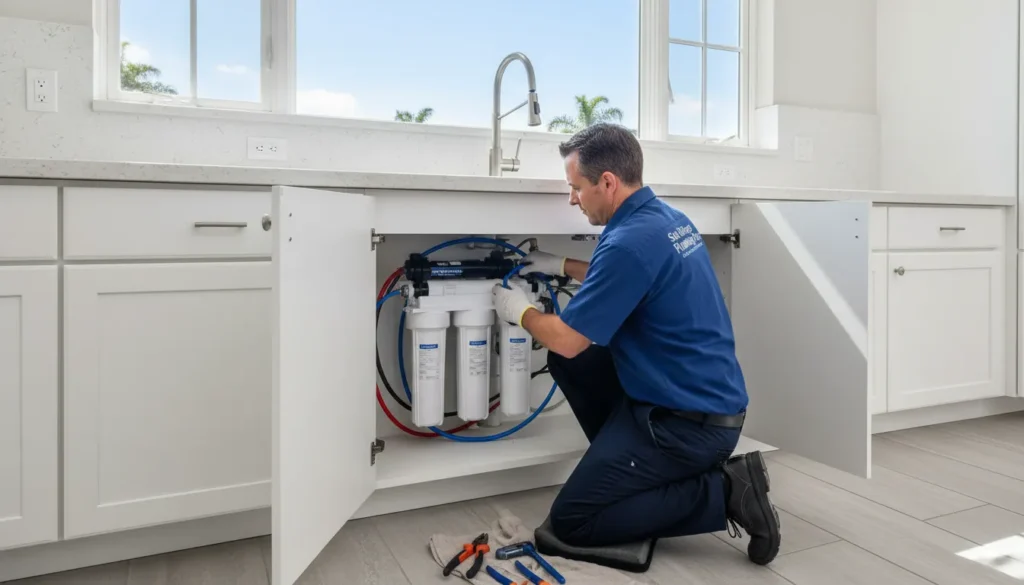
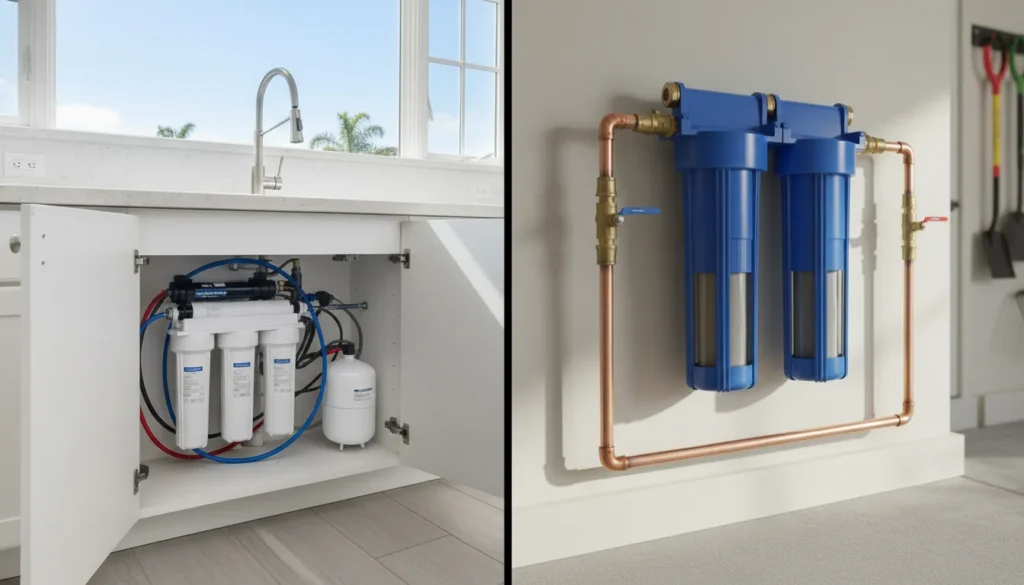
A reverse osmosis (RO) system forces water through a semi-permeable membrane under pressure. The membrane has pores so small that dissolved contaminants cannot pass through. Most residential RO systems use three to five filtration stages: a sediment pre-filter, one or two activated carbon filters to remove chloramines and organic compounds, the RO membrane itself, and a post-carbon polishing filter.
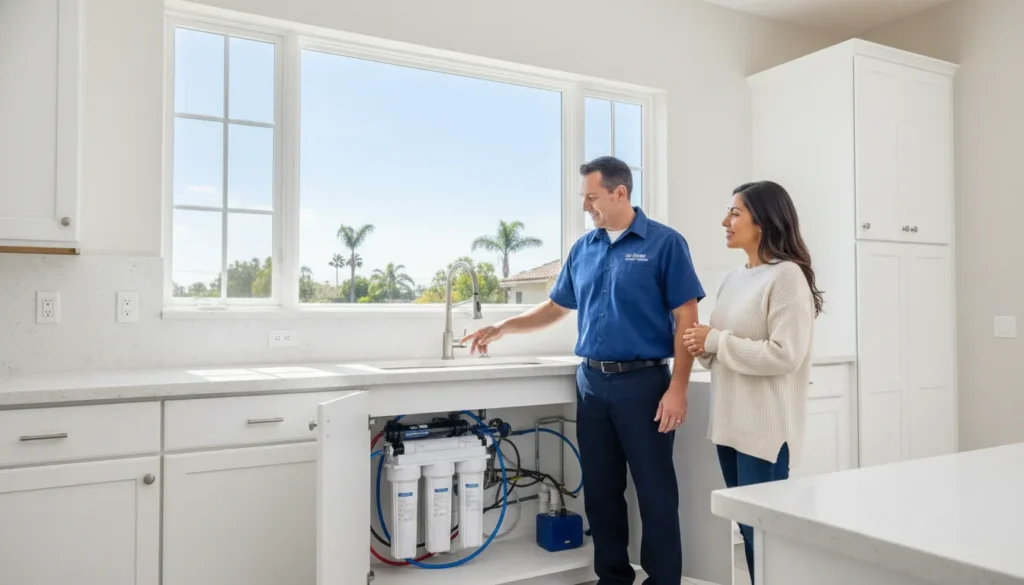
RO systems install under the kitchen sink and connect to a dedicated faucet on your countertop. A small storage tank holds several gallons of purified water so it is ready on demand. The system produces water at a slower rate than a standard tap, which is why the storage tank matters.
What a reverse osmosis system removes:
• Total dissolved solids (TDS), including minerals and salts
• Heavy metals: lead, arsenic, chromium, and mercury
• Nitrates and nitrites
• Fluoride
• Chlorine, chloramines, and many volatile organic compounds (VOCs)
• Certain pharmaceuticals and trace contaminants
An RO system treats water at one point of use, typically the kitchen sink. It does not filter water going to your shower, laundry, or other fixtures in the home.
How a Whole House Water Filter Works
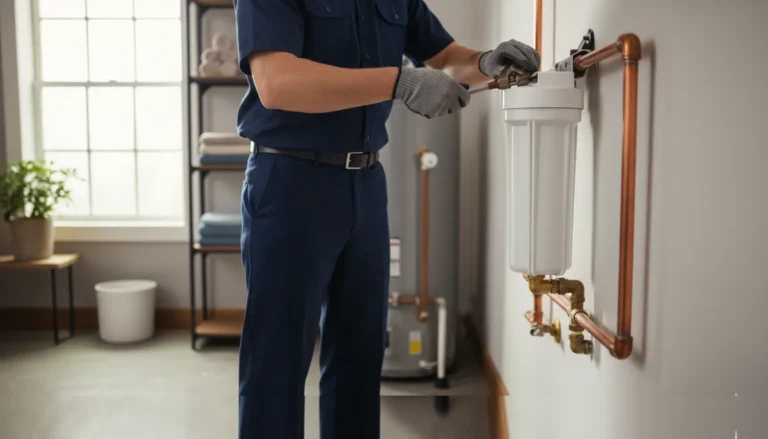
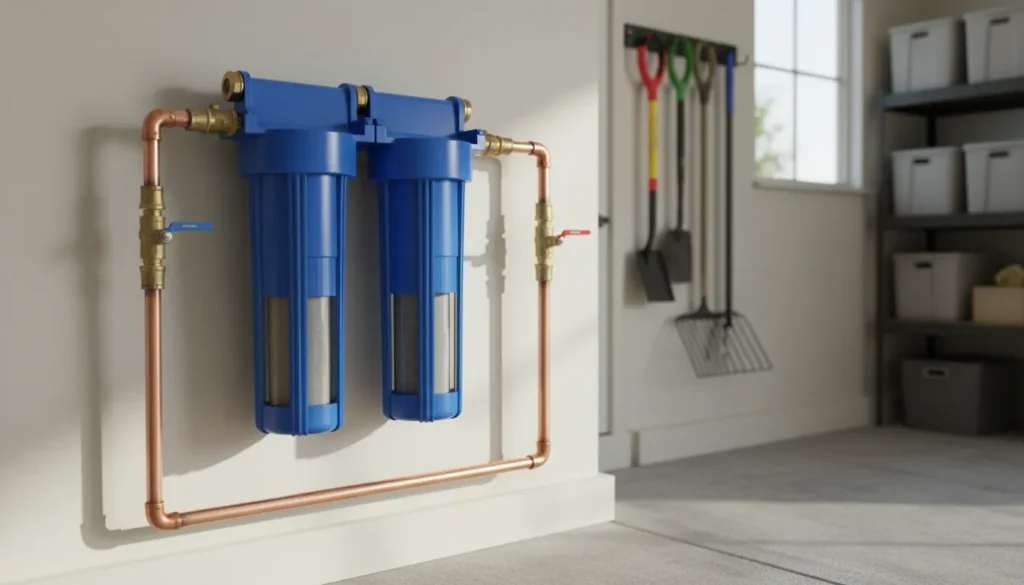
A whole house water filter installs at the main water line entering your home, before the water reaches any fixture or appliance. This is called a point-of-entry installation. Every tap, shower, toilet fill valve, dishwasher, and washing machine in your home receives filtered water.
Most whole house systems use a combination of stages: a sediment filter that catches sand, rust, and debris, followed by an activated carbon block that removes chlorine, chloramines, and certain organic compounds. Some systems add a secondary carbon stage or a scale inhibitor cartridge suited for San Diego’s hard water.
What a whole house filter removes:
• Sediment, sand, rust particles, and debris
• Chlorine and chloramines (including the taste and odor they cause)
• Many organic compounds and some VOCs
• Scale-forming minerals (with a scale inhibitor stage)
A whole house filter does not remove dissolved solids like heavy metals, nitrates, or fluoride. Carbon filtration captures organic chemicals but cannot pull dissolved inorganic compounds from water the way an RO membrane can.
Side-by-Side Comparison
|
Factor |
Reverse Osmosis |
Whole House Filter |
|
Treatment scope |
Deep purification: removes dissolved solids, heavy metals, nitrates, fluoride |
Sediment, chlorine, chloramines, some organics |
|
Installation location |
Under kitchen sink (point of use) |
Main water line (point of entry) |
|
Water output volume |
Low — relies on a storage tank (typically 2–4 gallons) |
Full household flow rate |
|
What it protects |
Drinking and cooking water at the kitchen |
Every tap, appliance, and fixture in the home |
|
Filter maintenance |
Pre/post filters every 6–12 months; RO membrane every 2–5 years |
Sediment and carbon cartridges every 6–12 months |
|
Installed cost (San Diego) |
$300–$800 installed (system + labor) |
$500–$1,500+ installed depending on system size and stages |
|
Removes TDS |
Yes (up to 97–99%) |
No |
|
Removes chloramines |
Yes (via carbon pre-filters) |
Yes (at all fixtures) |
When Reverse Osmosis Is the Better Choice
Choose RO if you have:
• Concerns about lead, arsenic, or other heavy metals in your water
• High total dissolved solids (TDS) causing flat or mineral-heavy taste
• Elevated nitrate levels, common in older San Diego neighborhoods with agricultural history
• A preference for purified water for drinking, cooking, and baby formula
• Specific contaminants flagged on your water quality report
Choose a whole house filter if you have:
• A chloramine or chlorine taste throughout the home, including showers
• Sediment or rust discoloring water at multiple fixtures
• Appliances like water heaters and dishwashers that scale quickly
• Skin or hair sensitivity to chlorinated water
• Older pipes where sediment enters the supply line
San Diego note: The City of San Diego uses chloramines rather than chlorine to disinfect its water supply. Chloramines are harder to remove than chlorine and require an activated carbon block rated specifically for chloramine removal. Both RO pre-filters and quality whole house carbon filters can handle this, but confirm the filter you buy is rated for chloramine reduction.
Can You Install Both?
Yes, and many San Diego households do exactly that. The systems complement each other without overlap. A whole house filter handles sediment and chloramine reduction at every fixture in your home, protecting pipes, appliances, and the water you shower in. The RO system under your kitchen sink then takes that already-filtered water and purifies it further for drinking and cooking.
Running both is the most complete water quality setup available for a residential home. It is also practical: the whole house filter actually extends the life of your RO membrane by reducing the sediment and chloramine load it has to process.
Installation and Maintenance
Reverse Osmosis Installation
A licensed plumber installs an RO system by connecting it to the cold water supply line under the kitchen sink, mounting the storage tank, and drilling or using an existing hole in the sink for the dedicated faucet. Most installations take two to three hours. The system requires no electrical connection in standard configurations, though remineralization and UV options add complexity.
Whole House Filter Installation
Installation requires cutting into the main water supply line, usually near the water meter or where the main enters the home. The plumber adds shut-off valves on each side of the filter housing, installs the filter assembly, and restores water flow. The job typically takes two to four hours depending on access and the number of filter stages. San Diego homes with older galvanized or copper supply lines may need additional fittings.
Ongoing Maintenance
Both systems require periodic filter changes. For an RO system, pre-filters and post-filters need replacement every six to twelve months, and the RO membrane lasts two to five years depending on your water quality and usage. For a whole house filter, cartridge replacement follows a similar six-to-twelve-month schedule. A licensed plumber can handle replacements quickly during a routine service visit.
“Stefan and his team re-piped our entire house and also installed a water filtration system. I can honestly say that it was the best experience we ever had with a plumbing company. The flow of information, quality of work and attention to detail was exceptional.”
Frequently Asked Questions
Is reverse osmosis better than a whole house water filter?
Reverse osmosis provides deeper purification than a standard whole house filter. It removes dissolved contaminants like nitrates, heavy metals, and total dissolved solids that whole house filters cannot. A whole house filter protects every tap and appliance in your home, while an RO system typically serves one point of use at the kitchen sink. The better choice depends on whether your primary concern is drinking water purity or whole-home protection. Many San Diego homeowners install both for complete coverage.
Does a whole house filter remove chlorine?
Yes. Most whole house water filters use activated carbon, which removes chlorine and chloramines from every water outlet in your home. San Diego’s water supply is treated with chloramines, so a whole house filter with an activated carbon block stage rated for chloramine removal is particularly effective here. It improves the taste and odor of drinking water and eliminates the chemical smell from showers.
Which water filter removes the most contaminants?
A reverse osmosis system removes the widest range of contaminants, including dissolved solids, heavy metals, nitrates, fluoride, arsenic, and many volatile organic compounds. A multi-stage RO system can remove up to 97–99% of contaminants in the water passing through it. Whole house filters address sediment, chlorine, and certain organic compounds but do not reduce dissolved solids or heavy metals to the same degree.
Can I install both a reverse osmosis system and a whole house water filter?
Yes, and many San Diego homeowners choose exactly that. A whole house filter handles sediment and chloramine removal at every tap, while an under-sink RO system provides high-purity drinking water in the kitchen. The systems work together: the whole house filter reduces the load on your RO membrane, extending its lifespan. Running both gives your household complete water quality coverage from every fixture.
Not Sure Which System Fits Your San Diego Home?
Repipe Home Hero installs both reverse osmosis and whole house water filtration systems across San Diego County. Call us or send a message and we will walk you through the right option for your water supply, budget, and household.
Call us at (619) 386-0375 or Get a Free Quote.