San Diego’s tap water is treated, regulated, and technically safe to drink. It also contains chloramine, elevated total dissolved solids (TDS), nitrates, and measurable levels of fluoride. These compounds pass through standard carbon filters. They do not pass through a reverse osmosis membrane. For homeowners who want drinking water that is genuinely clean rather than just compliant, a reverse osmosis system is the most effective solution available at the residential level.
This guide covers everything you need to know before scheduling an installation: how RO works, why it suits San Diego’s water profile, what the installation involves, what it costs, and how to maintain the system afterward.
What Is Reverse Osmosis?
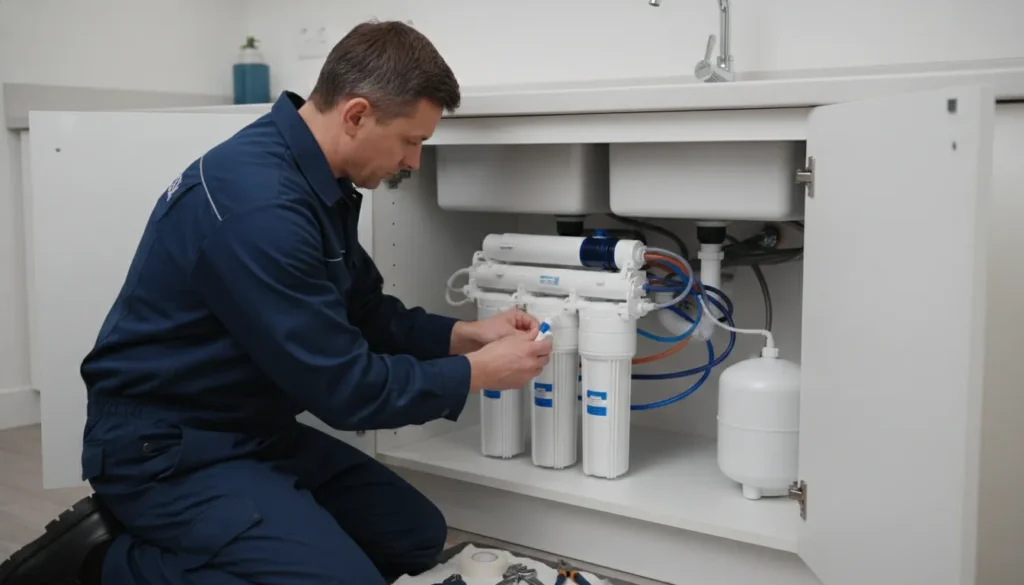
Reverse osmosis forces water through a semipermeable membrane under pressure. The membrane has pores so small (approximately 0.0001 microns) that dissolved salts, heavy metals, nitrates, chloramine, fluoride, and most organic compounds cannot pass through. What makes it through is almost pure water. What does not make it through is flushed away as reject water.
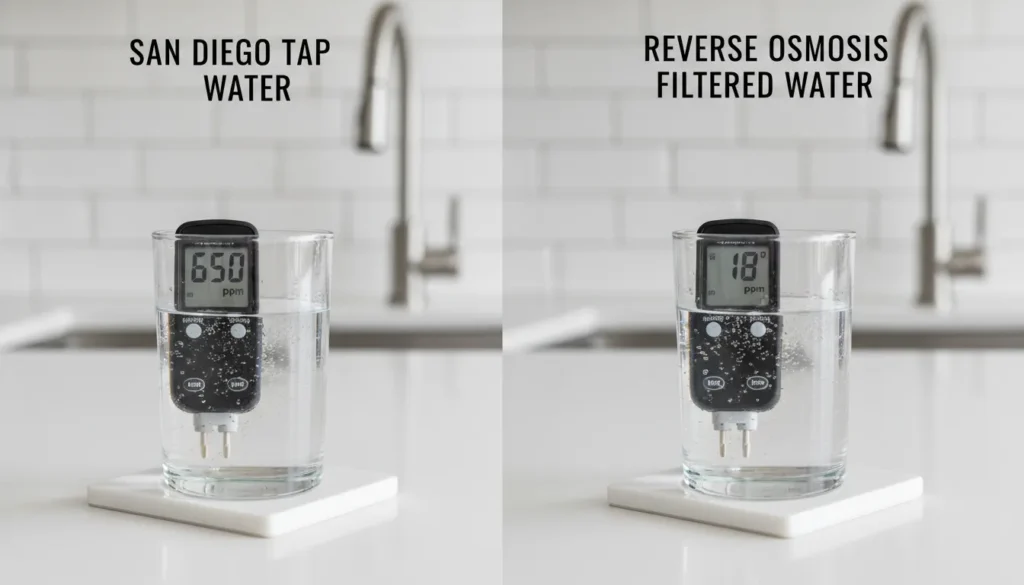
A typical residential RO system uses three to five filtration stages: a sediment pre-filter, a carbon pre-filter, the RO membrane, a post-carbon polishing filter, and optionally a remineralization stage that adds beneficial calcium and magnesium back into the permeate water. The result is water with a TDS reading typically below 20 parts per million, compared to San Diego tap water which often reads 500 to 800 ppm.
Why Reverse Osmosis Makes Sense for San Diego Homes
San Diego sources its water from two primary places: the Colorado River and the State Water Project. Both sources carry naturally high mineral loads. By the time that water is treated, distributed, and reaches a San Diego home, it is high in TDS, hardness, and chloramine. San Diego County Water Authority’s annual water quality reports consistently reflect this profile.
- TDS (Total Dissolved Solids): San Diego tap water averages 500 to 800 ppm. Standard filters do not reduce TDS. RO reduces it to 10 to 50 ppm at the faucet.
- Chloramine: Used as a secondary disinfectant, chloramine creates a noticeable taste and odor. RO removes it effectively when paired with a carbon pre-filter stage.
- Nitrates: Present in some San Diego groundwater blended supplies, nitrates are a concern for infants and pregnant women. RO removes 85 to 95% of nitrates.
- Fluoride: San Diego fluoridates its water at approximately 0.7 mg/L. RO removes 85 to 95% of fluoride, which is important to families who prefer to control their fluoride intake.
No pitcher filter, faucet filter, or standard carbon block filter achieves these reduction rates for dissolved solids. RO is the benchmark residential technology for drinking water purity.
Types of Reverse Osmosis Systems for San Diego Homes
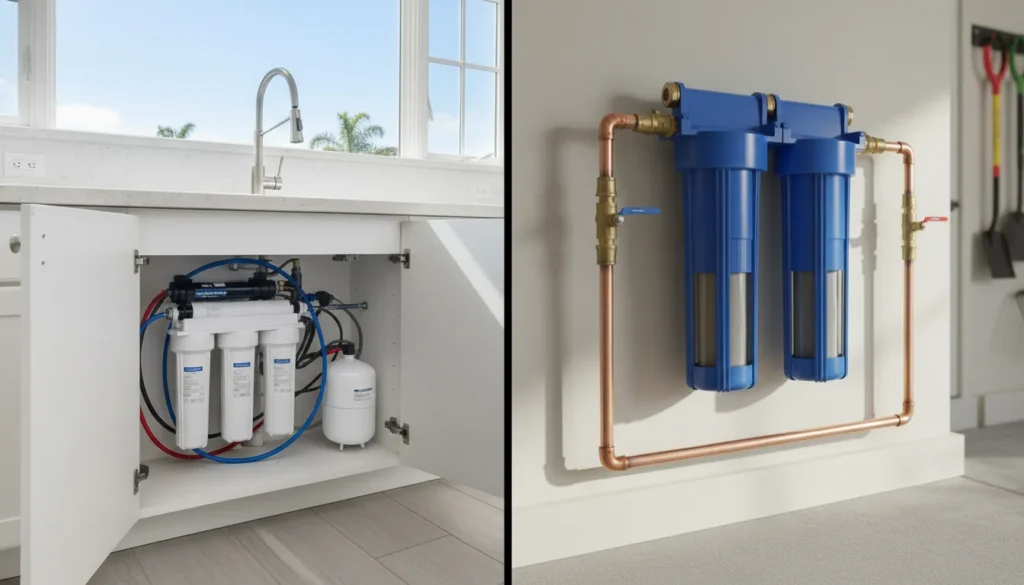
Under-Sink RO Systems
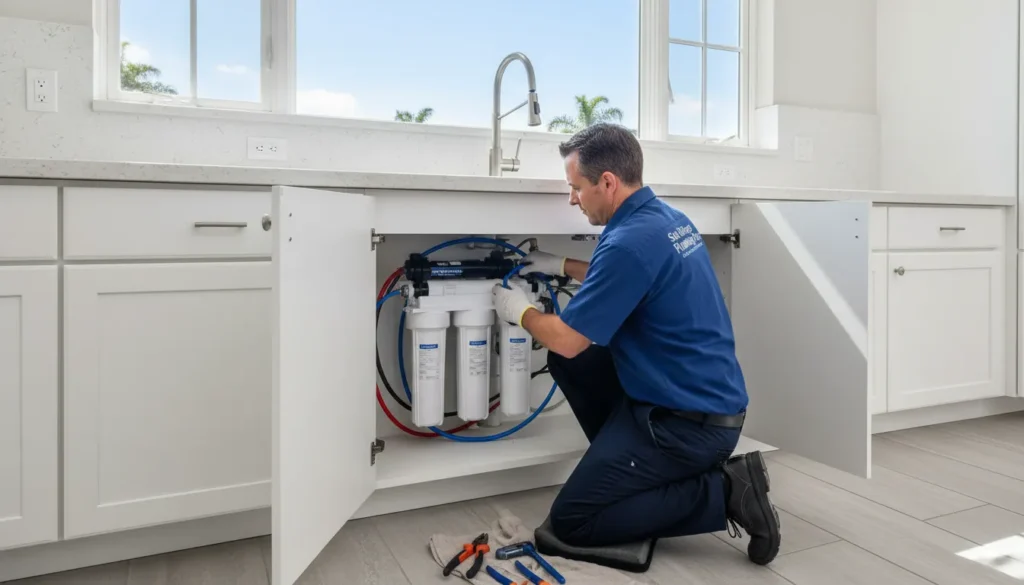
The most popular choice for San Diego homeowners. The unit installs under the kitchen sink with a dedicated faucet on the countertop. It treats drinking and cooking water at the point of use. Most under-sink systems include a storage tank (typically 2 to 4 gallons) so filtered water is available on demand. Installation takes 2 to 4 hours and causes no disruption to the rest of the home’s water supply.
Countertop RO Systems
These connect to an existing faucet without permanent installation. They are portable and ideal for renters or temporary use. They have lower flow rates and smaller tanks than under-sink systems. For homeowners, a permanent under-sink installation is almost always the better choice.
Whole House RO Systems
These treat all water entering the home to RO purity. They are suitable for homes with very high TDS or specific health requirements. They cost significantly more than under-sink systems (typically $2,000 to $4,500 installed) and produce more reject water. For most San Diego homeowners, an under-sink RO for drinking water paired with a whole house multi-stage filter is a more practical combination.
The Reverse Osmosis Installation Process Step by Step
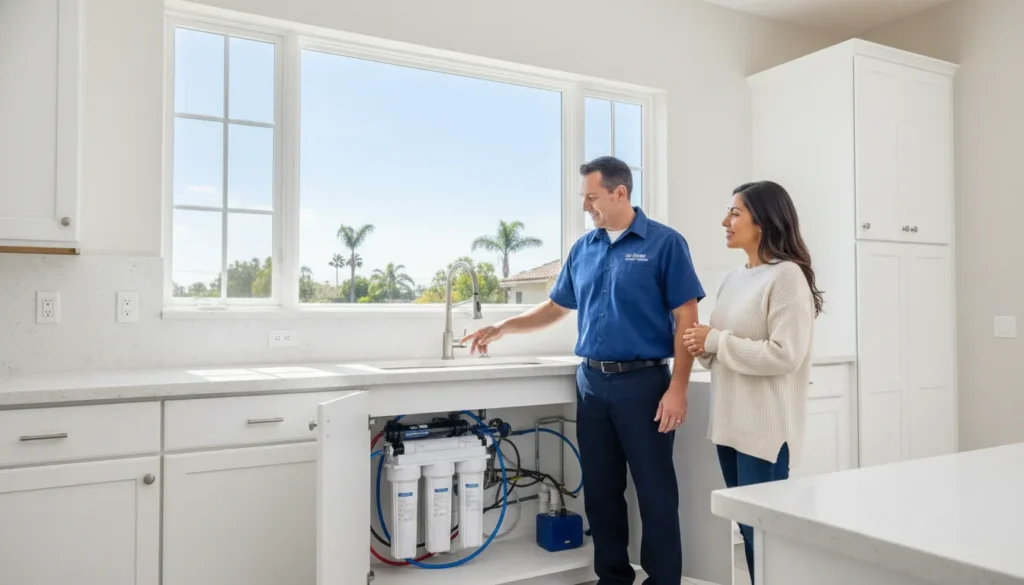
Knowing what happens during installation removes the uncertainty and helps you prepare your kitchen in advance. Here is what a professional RO installation by Repipe Home Hero looks like from start to finish.
Step 1: Initial Assessment
The plumber inspects the under-sink space, confirms the cold water supply line is accessible, checks for a nearby drain connection, and determines whether the countertop or sink has space for the dedicated RO faucet. If your sink has a pre-drilled faucet hole (common in San Diego homes with European-style sinks), no counter drilling is required.
Step 2: Cold Water Supply Tap
A saddle valve or a feed water adapter is installed on the cold water supply line under the sink to divert a supply feed to the RO unit. Most modern installations use a compression-style feed water adapter rather than a piercing saddle valve for a more reliable connection.
Step 3: Drain Connection
A drain saddle is installed on the sink drain pipe to carry reject water away. The reject water line connects the RO unit to the drain, routed to avoid kinking and positioned at the correct height to prevent backflow.
Step 4: System Assembly and Tank Connection
The filter housings are mounted, filter cartridges and the RO membrane are loaded, and the storage tank is connected. All connections are hand-tightened and then confirmed with a wrench before water is turned on.
Step 5: Dedicated Faucet Installation
The RO faucet is installed through the countertop or sink deck. If a new hole is needed, the plumber drills it using the appropriate bit for your sink material (stainless steel or porcelain).
Step 6: System Flush and Pressure Test
The system runs through an initial flush cycle to clear the membrane and filter media of preservatives. The tank fills, and all connections are checked for leaks under pressure. A TDS meter reading confirms the system is producing purified water within spec.
How Long Does Installation Take?
Most standard under-sink RO installations in San Diego take 2 to 4 hours. Countertop drilling, unusual plumbing configurations, or tight under-sink spaces can add time. The system is ready to use the same day, though it is standard practice to flush the first full tank before drinking the water.
Cost of Reverse Osmosis Installation in San Diego
| Component | Typical Cost Range |
| Under-sink RO system (4 to 5 stage) | $150 – $600 |
| Professional installation labor | $200 – $450 |
| Countertop drilling (if needed) | $50 – $100 |
| Total typical range | $400 – $1,150 |
Annual maintenance costs (filter cartridge replacements every 6 to 12 months, membrane replacement every 2 to 3 years) typically run $80 to $200 per year for a residential under-sink system. Considering that bottled water in San Diego averages $1 to $2 per gallon, an RO system pays for itself within one to two years for a household that currently purchases bottled water.
Alexander S., verified Google review: “Stefan and his team repiped our entire house and also installed a water filtration system. I can honestly say that it was the best experience we ever had with a plumbing company. The flow of information, quality of work and attention to detail was exceptional.”
Maintenance Schedule for Your RO System
A reverse osmosis system requires periodic maintenance to perform at its rated level. Here is a standard schedule for San Diego conditions:
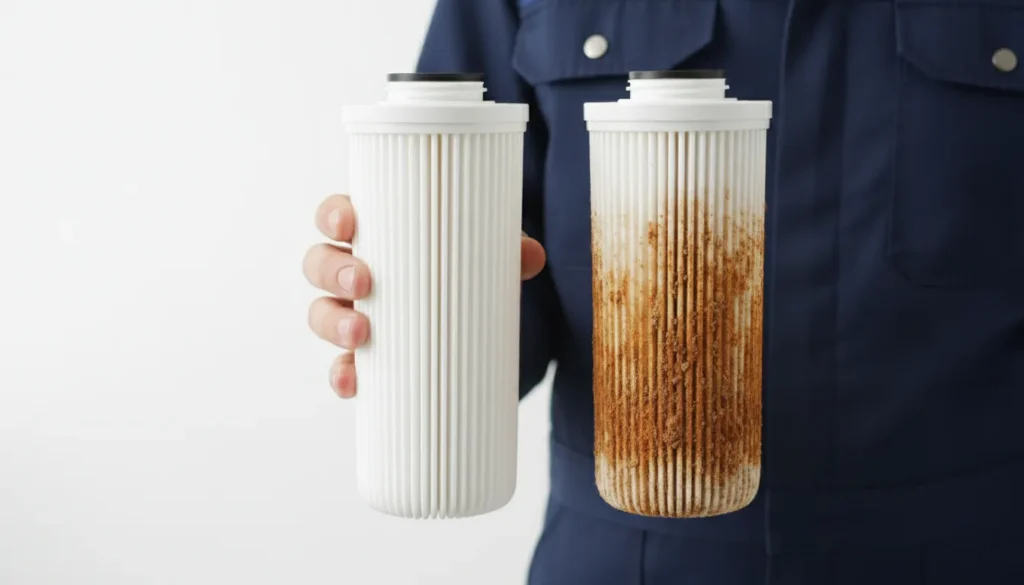
- Every 6 months: Replace sediment pre-filter cartridge and carbon pre-filter cartridge. San Diego’s higher TDS load can clog pre-filters faster than the manufacturer’s standard 12-month estimate.
- Every 12 months: Replace post-carbon polishing filter and sanitize the storage tank if your system includes one.
- Every 2 to 3 years: Replace the RO membrane. A TDS pen reading at the faucet confirms when the membrane is no longer performing to spec.
If you also have a water softener upstream of the RO system, it significantly extends membrane life by reducing the mineral load reaching the membrane.
Frequently Asked Questions
How much water does a reverse osmosis system waste?
Standard residential RO systems produce 1 to 4 gallons of reject water per gallon of purified water. High-efficiency systems (permeate pump models) reduce this ratio to approximately 1:1. For San Diego homeowners concerned about water bills or drought conservation, a high-efficiency model is worth the additional upfront cost.
Can I install a reverse osmosis system if I have a garbage disposal?
Yes. The drain connection is made to the sink drain above the P-trap, and the disposal does not interfere with RO drain line placement. The licensed plumber selects the correct connection point based on your sink configuration.
Does reverse osmosis remove beneficial minerals?
Yes. RO removes the majority of dissolved minerals, including calcium and magnesium. If you prefer remineralized water, ask about systems with a remineralization stage that adds trace minerals back into the purified water before it reaches the faucet.
Is an under-sink RO system enough, or do I also need a whole house filter?
An under-sink RO covers your drinking and cooking water to the highest purity standard. A whole house water filter handles the broader concerns of chloramine in your shower, scale on your fixtures, and sediment reaching your appliances. Most San Diego homeowners benefit from both, installed together in a single visit.
Schedule Your Reverse Osmosis Installation in San Diego
Repipe Home Hero installs reverse osmosis systems across San Diego County including La Jolla, Carmel Valley, Del Mar, Encinitas, Rancho Santa Fe, Solana Beach, Carlsbad, and Oceanside. C-36 Licensed • Bonded • Insured • 250+ Five-Star Google Reviews.
View our RO Installation Services, Get a Free Quote or Call us at (619) 386-0375