You fill a glass of water from the kitchen faucet and notice a slight cloudiness before it clears. Or your showerhead starts restricting flow months after it was cleaned. Maybe your water heater is making a popping noise it never made before. All three of these are common signs that sediment is moving through your home’s water supply.
Sediment filtration is one of the most basic and most effective steps a San Diego homeowner can take to protect their plumbing system, appliances, and water quality. This article explains what sediment is, how sediment filters work, and whether your San Diego home needs one.
What Is Sediment in Your Water Supply?
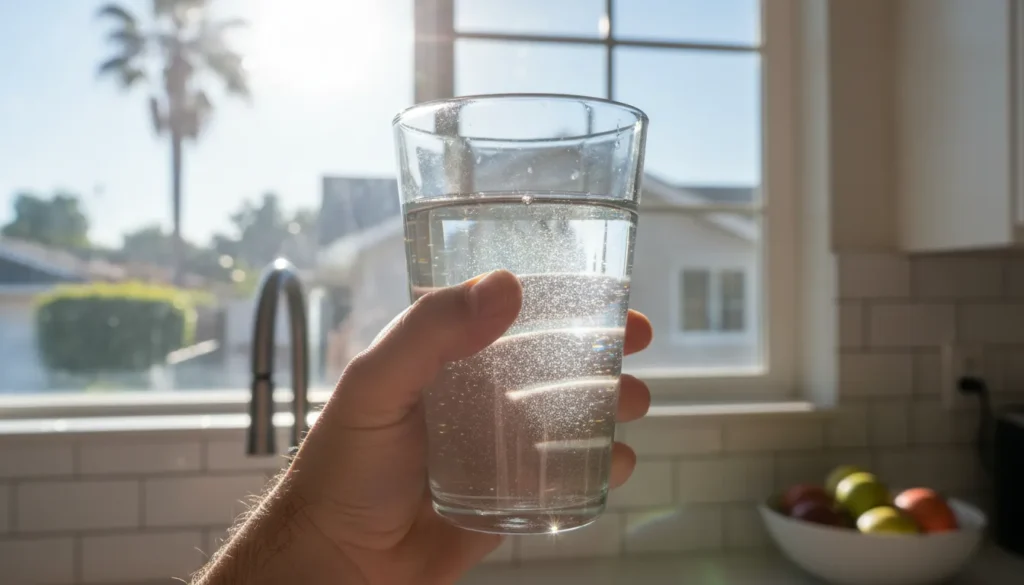
Sediment is the physical, solid material that travels through your water supply. It includes sand, silt, rust particles, mineral scale fragments, and fine debris. In San Diego, sediment enters the water supply from several sources:
Aging municipal pipes: San Diego’s distribution infrastructure includes pipes that are decades old. As they corrode or deteriorate, fine particles enter the flow.
Colorado River water: A significant portion of San Diego’s supply comes from the Colorado River via the Metropolitan Water District. This source carries naturally higher levels of suspended fine particles and mineral turbidity.
Residential pipe age: Homes in older San Diego neighborhoods like North Park, University Heights, and Chula Vista may have galvanized steel or aging copper pipes that release rust and scale into the water at the fixture level.
Post-maintenance disturbances: Work on nearby city mains or your own service line can temporarily stir sediment that then flows into your home.
The result is water with suspended particles. Most are invisible to the naked eye but accumulate inside your plumbing, appliances, and water-using equipment over time.
What Is a Sediment Filter?
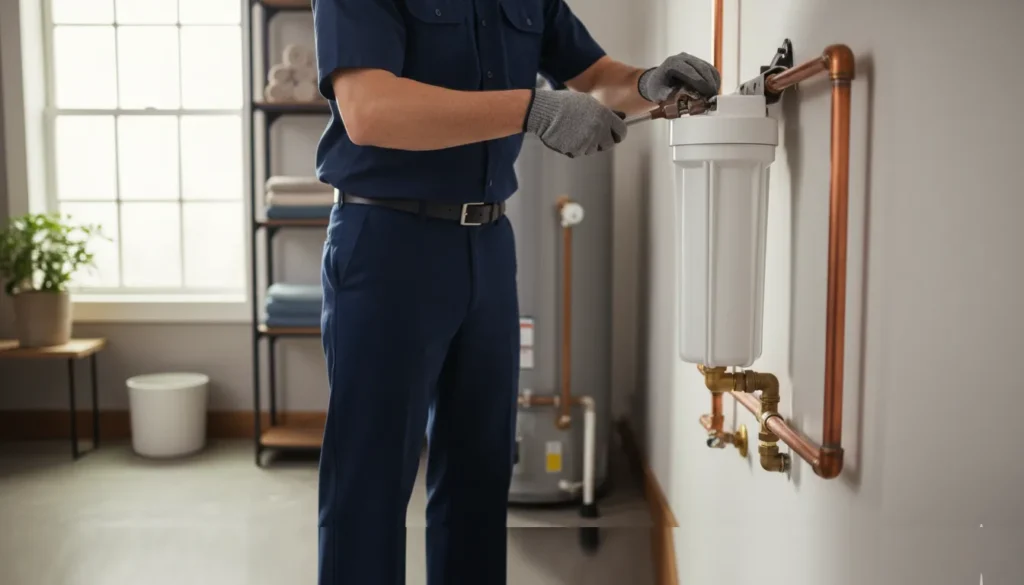
A sediment filter is a physical barrier installed on your water supply line that captures solid particles before they enter your home’s plumbing. The filter media has tiny pores measured in microns. A 5-micron filter catches particles 5 microns or larger in diameter. A 1-micron filter catches finer particles. As water flows through the media, particles larger than the pore size are physically trapped and held in the filter housing.
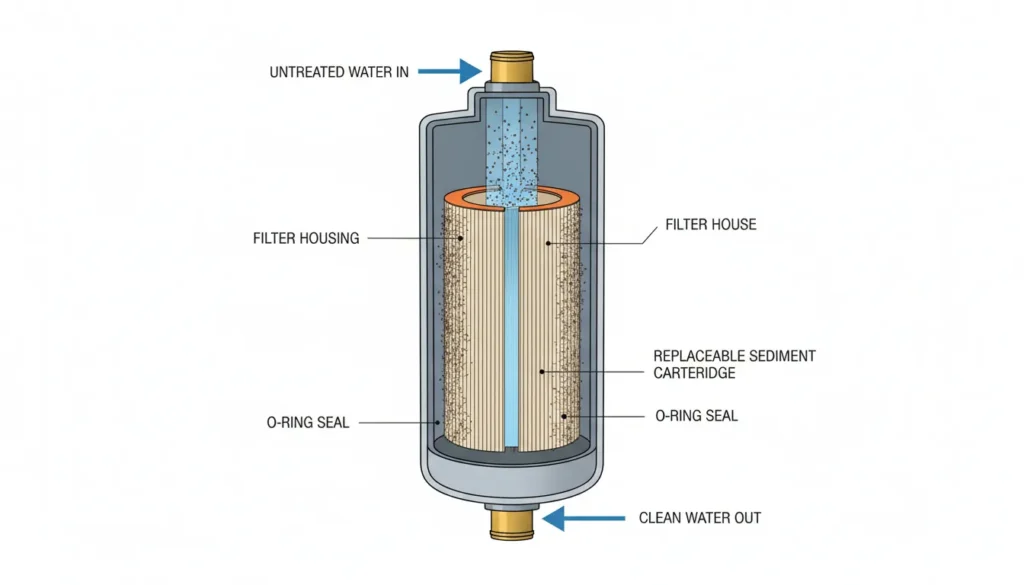
Sediment filters do not remove dissolved chemicals, chlorine, or heavy metals. They address physical particles only. For broader water quality improvement, sediment filtration is typically the first stage in a multi-stage water filtration system. It protects downstream filter stages from clogging prematurely.
Types of Sediment Filters
1. Spin-Down Sediment Filters
These use centrifugal force to spin larger particles out of the water flow and collect them in a clear bowl at the bottom. They are reusable, easy to flush, and ideal as a first-stage pre-filter for heavily sediment-loaded water. They work best for particles above 50 microns.
2. Cartridge Sediment Filters
The most common type for residential use. A replaceable cartridge inside a filter housing captures particles down to 1 or 5 microns. They are compact, affordable, and easy to maintain. Cartridges are replaced every 3 to 6 months depending on local sediment levels and water usage.
3. Backwash Sediment Filters
These use a media bed (often sand or granular media) that periodically flushes sediment to drain automatically. They suit homes with high ongoing sediment levels and are more cost-effective long-term than frequent cartridge replacement. They require more installation space and a drain connection.
Signs You May Have a Sediment Problem
You do not need a lab test to identify a likely sediment issue. Look for these indicators in your San Diego home:
• Cloudy or brownish water from any tap, especially after a period of no use
• Clogged aerators on kitchen or bathroom faucets that require regular cleaning
• Reduced pressure or flow at showerheads that were fine a year ago
• Popping or rumbling sounds from your water heater (sediment collects at the tank bottom)
• Grit or debris visible in toilet tanks when you lift the lid
• Shortened service life on washing machine inlet valve screens
Tip for Escondido, Poway, and inland San Diego homeowners: Homes farther from the coast and served by older neighborhood distribution lines tend to see higher sediment levels. If your neighbors on the same street are experiencing similar issues, it is often a shared line condition that a whole house filter resolves.
How Sediment Damages Your Home
Sediment is not just an aesthetic inconvenience. It causes real, measurable damage to plumbing systems and appliances over time.
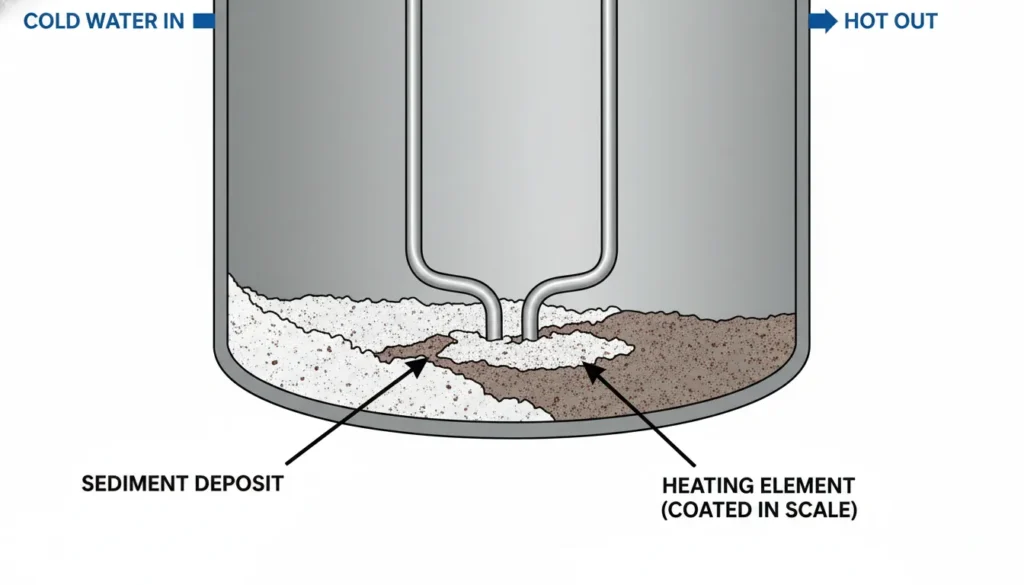
Inside water heaters, sediment collects on the tank floor and creates an insulating layer between the burner and the water. The heater works harder, uses more energy, and overheats the tank bottom, shortening the unit’s life. Sediment is a leading cause of premature water heater failure in San Diego homes. If you are due for a residential plumbing inspection, a plumber can assess sediment accumulation in your tank.
In pipes and fittings, fine particles accelerate wear on valve seats, cartridges, and washer connections. This creates drips and leaks that cost money to repair. Washing machine inlet valves, refrigerator ice maker lines, and dishwasher inlet screens are especially vulnerable.
Do San Diego Homes Need Sediment Filtration?
For most San Diego homes, yes. The combination of Colorado River source water, aging distribution infrastructure in established neighborhoods, and locally high mineral content creates conditions where sediment is a persistent issue, not a temporary one.
Even newer homes in Carmel Mountain Ranch or Rancho Peñasquitos benefit from sediment pre-filtration because city mains in high-demand areas see turbidity spikes that send particles downstream. The cost of a basic sediment filter is a fraction of one water heater replacement or one appliance repair call.
Sediment Filter vs. Whole House Water Filter
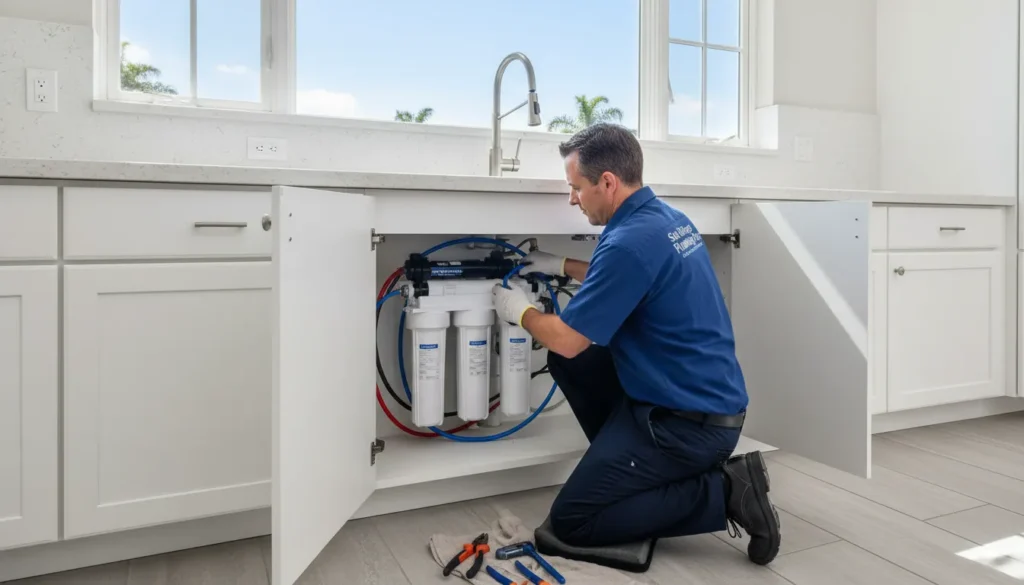
A standalone sediment filter removes physical particles only. If your only concern is grit, debris, or rust in the water, a single-stage sediment filter is a cost-effective fix. If you also want to address chloramine taste and odor, TDS, or hard water mineral load, a whole house multi-stage water filter is the better investment. Most whole house systems include a sediment stage as the first element, so you get both in one installation.
Considering water softening for scale issues? Read more about water softener installation in San Diego and how it pairs with sediment filtration for a complete water treatment solution.

Frequently Asked Questions
How often do I need to replace a sediment filter cartridge in San Diego?
Every 3 to 6 months is typical for most San Diego addresses. Homes in Escondido, Poway, or properties served by older mains may need replacement closer to every 3 months due to higher local sediment levels.
Does a sediment filter affect water pressure?
A correctly sized sediment filter has no noticeable effect on pressure. If pressure drops after installation, the filter is likely undersized for your home’s flow rate or the cartridge needs replacement. A licensed plumber sizes the system to your home’s specific GPM requirements.
Will a sediment filter remove chlorine or improve water taste?
No. Sediment filters capture physical particles only. For chloramine, taste, and odor improvement, a carbon block filter stage is required. Most whole house filtration systems combine sediment and carbon filtration for complete treatment.
Where should a sediment filter be installed in my home?
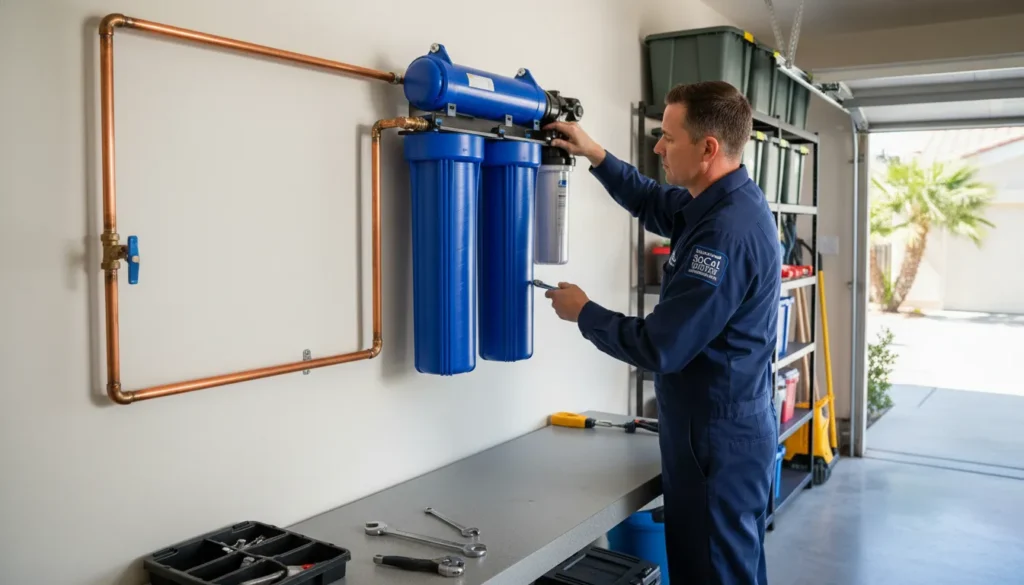
At the main water entry point, before the water heater and any branch lines. This protects the entire system from incoming particles. If you also have a water heater, installing the sediment filter upstream protects the tank and extends its life significantly.
Protect Your San Diego Home From Sediment Damage
Repipe Home Hero installs whole house water filtration and sediment filtration systems across San Diego County including Poway, Escondido, Chula Vista, Rancho San Diego, Spring Valley, La Mesa, and El Cajon. C-36 Licensed • Bonded • Insured.
View our Water Filtration Services, Get A Free Quote, or Call us at (619) 386-0375.