A pipe under the kitchen sink is spraying water. The toilet just overflowed onto the bathroom floor. Or you walked into the laundry room and found standing water halfway up the baseboard. Whatever the situation, your first few moves in a plumbing emergency determine how much damage you end up dealing with — and how much it costs to fix.
This guide walks you through exactly what to do, step by step. It also covers what qualifies as a true emergency, when to call a plumber immediately versus when you can wait, and what information to have ready when you make that call.

What Counts as a Plumbing Emergency?
Not every plumbing problem needs a midnight phone call. But some situations absolutely do. Here is how to tell the difference.
Call a plumber immediately for:
- A burst or broken pipe with active water flow
- A major leak inside a wall, ceiling, or under a slab
- Sewage or drain water backing up into the home
- A complete loss of water pressure or water supply to the whole house
- A water heater that is leaking, flooding, or showing signs of failure
- Any plumbing situation where water is spreading toward electrical panels, appliances, or structural areas
You can schedule a same-day or next-day visit for:
- A single dripping faucet with no pooling water
- A slow drain without backup
- A running toilet that is not overflowing
- Minor discoloration or staining in the water
When in doubt, treat it as an emergency. The cost of a fast response is almost always less than the cost of water damage that spreads for hours.
Step 1: Shut Off the Water Immediately
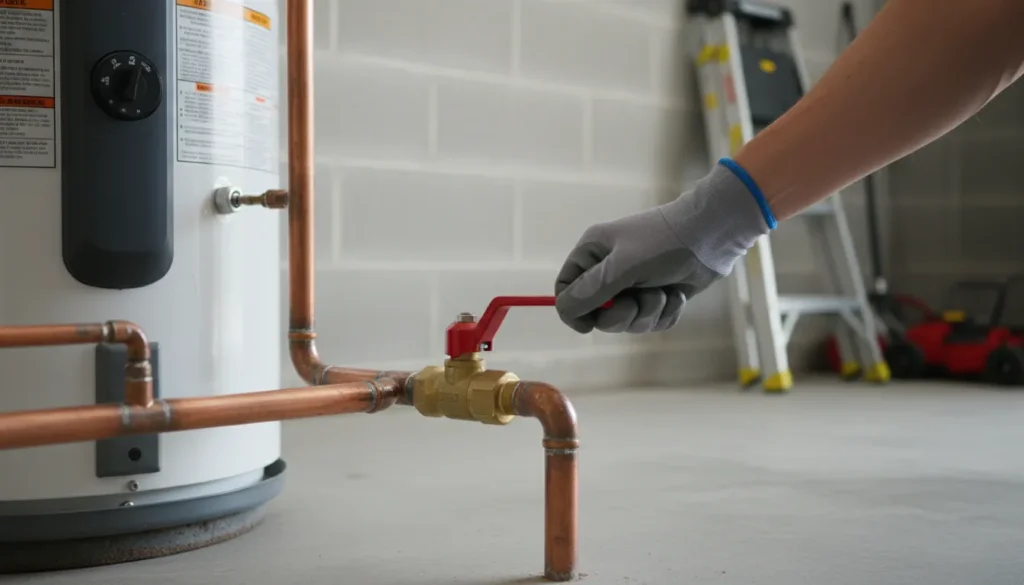
This is the single most important thing you can do. Stopping the water flow limits the damage while you figure out the next steps.
For a localized problem like a leak under a single sink, look for the shut-off valve on the supply line directly beneath the fixture. Turn it clockwise until it stops. Most sinks and toilets have their own individual shut-off valves for exactly this reason.
For a larger problem — a burst pipe, a major wall leak, or anything you cannot isolate to one fixture — go straight to the main water shut-off for the house. In most San Diego homes, this is located near the water meter at the front of the property, in the garage near the water heater, or along the exterior wall of the home.
Turn the main valve clockwise until it stops. Water flow to the entire house will stop. This is not a permanent fix, but it prevents thousands of gallons of additional damage while you handle the next steps.
If you do not know where your main shut-off is, find it now, before you ever need it.
Step 2: Turn Off the Water Heater
Once you shut off the main water supply, turn off the water heater as well. Tank water heaters that continue to run without incoming cold water can overheat, crack, or fail. For a gas water heater, turn the dial to the “pilot” setting. For an electric unit, flip the breaker at the electrical panel.
This step takes thirty seconds and protects one of the most expensive appliances in your home.
Step 3: Turn Off Electricity in Affected Areas
If water is pooling near any electrical outlets, panels, appliances, or light switches, shut off power to those areas at the breaker box. Water and electricity together create a serious safety risk. Do not touch standing water if you are unsure whether electricity is active in the area.
Step 4: Document the Damage
Before you start mopping or moving things, spend two minutes taking photos and short video clips of everything you can see. Photograph the water source, the affected flooring and walls, any damaged belongings, and any visible pipe damage. Note the time you first discovered the problem.
This documentation matters for your homeowner’s insurance claim. Most policies cover sudden, unexpected water damage, and clear documentation strengthens your case significantly.
Step 5: Stop Water From Spreading
Once you have shut off the supply and documented the damage, start limiting how far the water travels. Place towels or mop up standing water from floors. If water is coming through a ceiling, put a bucket or trash can underneath and puncture the most swollen area of the drywall to direct the drip instead of letting it spread further.
Move rugs, furniture, and belongings out of the affected area if you can do so safely.
Step 6: Call a Licensed Emergency Plumber in San Diego
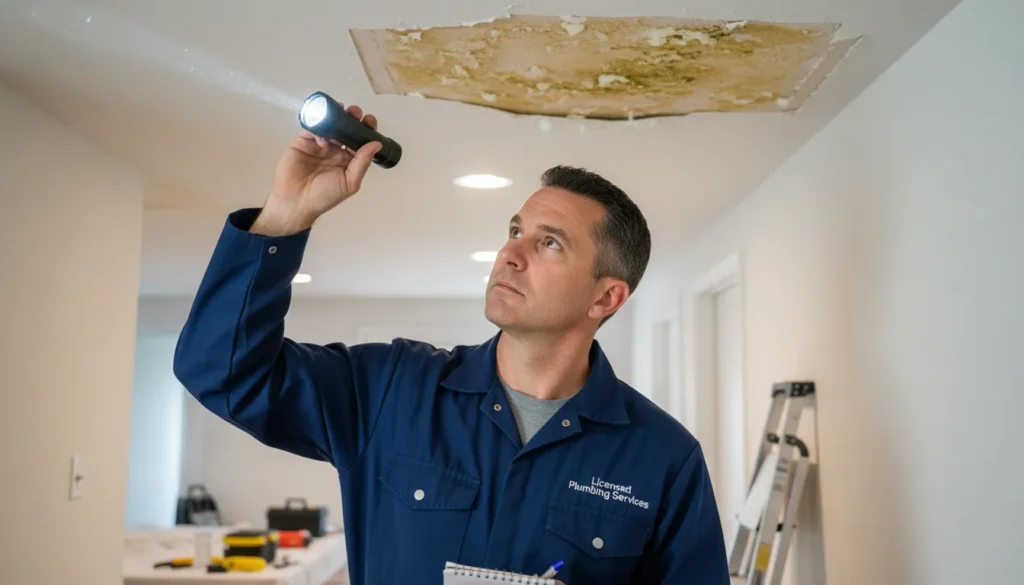
Now that you have stopped the water and secured the area, call a licensed plumber. In San Diego, look for a C-36 licensed contractor. This is the state-issued license for plumbing contractors in California, and it confirms the plumber has met the experience, training, and insurance standards required by the California State License Board.
Repipe Home Hero serves homeowners across La Jolla, Carmel Valley, Del Mar, Rancho Bernardo, Encinitas, Pacific Beach, and throughout San Diego County. The team carries a C-36 license (California Contractor License #1075463) and does not use subcontractors. If you need emergency leak repair or pipe burst repair, having one team handle it from start to finish makes the process faster and more reliable.
What to Tell Your Plumber When You Call
The more clearly you describe the situation, the faster the plumber can arrive prepared. Here is what to have ready:
- Your address and the best way to access the property
- Where the problem is (kitchen, master bath, crawl space, etc.)
- What you are seeing (water on the floor, water from the ceiling, no water at all)
- What you have already done (shut off the main, isolated a valve, turned off the water heater)
- Approximate age of your home and whether you know the pipe material (copper, PEX, galvanized steel)
- Whether you see any visible pipe damage or just water accumulation
This information helps your plumber bring the right materials for the job and set an accurate expectation for repair time and cost.
When a Plumbing Emergency Signals a Bigger Problem
A single pipe failure or leak sometimes reflects the overall condition of the plumbing in the home. Homes built in San Diego between the late 1970s and mid-1990s often used polybutylene pipe, which degrades and fails over time. Homes with galvanized steel piping are also prone to corrosion from San Diego’s hard, mineral-rich water supply.
If your plumber discovers that the failed pipe is part of a larger aging system, a whole-house repipe is often the most cost-effective long-term solution. Repairing one section while the rest of the system continues to deteriorate often results in multiple repair calls over the next few years.
How to Prevent the Next Plumbing Emergency
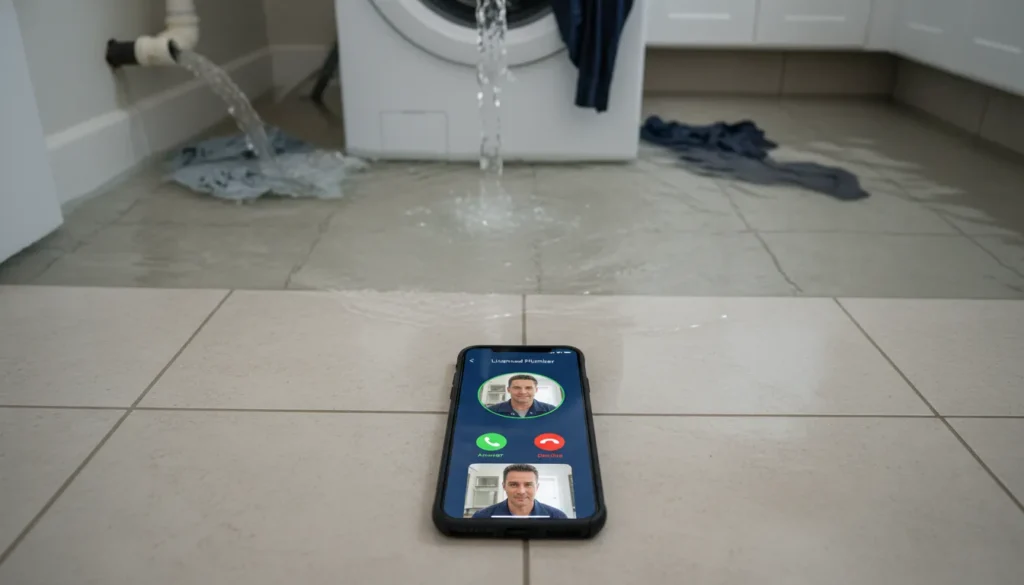
You cannot prevent every plumbing problem, but you can reduce the risk significantly.
- Schedule an annual plumbing inspection. A licensed plumber can identify weak connections, early corrosion, and pressure issues before they become emergencies.
- Know where your main shut-off valve is. Walk through your home today and make sure every adult in the household knows where it is and how to use it.
- Monitor your water pressure. High pressure above 80 PSI puts stress on every pipe, fitting, and appliance in your home. A pressure regulator installation is an inexpensive fix that protects the entire system.
- Replace aging pipes proactively. If your home has original plumbing from the 1960s, 1970s, or 1980s, talk to a licensed plumber about the realistic lifespan of what you have.
A plumbing emergency is stressful. But knowing what to do in the first ten minutes can mean the difference between a manageable repair and a major renovation.
If you are dealing with a plumbing emergency in San Diego right now, contact Repipe Home Hero or call (619) 386-0375. Licensed, insured, family-owned, and serving all of San Diego County.