San Diego tap water is safe by EPA standards. It is also among the hardest, most mineral-loaded water in California. If you have ever noticed white buildup on your faucets, a faint chemical taste, or chalky residue in your coffee maker, that is your water supply telling you something. A reverse osmosis system fixes all of it.
San Diego’s Metropolitan Water District and local utilities treat the water supply extensively — but treatment adds its own compounds. Chloramines replace chlorine for disinfection. Total dissolved solids remain high because the source water (Colorado River and State Water Project) arrives already mineral-rich. No amount of municipal treatment changes that underlying chemistry.
This guide explains exactly what reverse osmosis removes from San Diego tap water, what a professional installation looks like, and what you will pay.
San Diego Tap Water: What’s Actually in It
| Measurement | Value |
|---|---|
| Typical San Diego TDS range | 400–800 mg/L |
| WHO drinking water benchmark | 300 mg/L |
| TDS after reverse osmosis filtration | 10–50 mg/L |
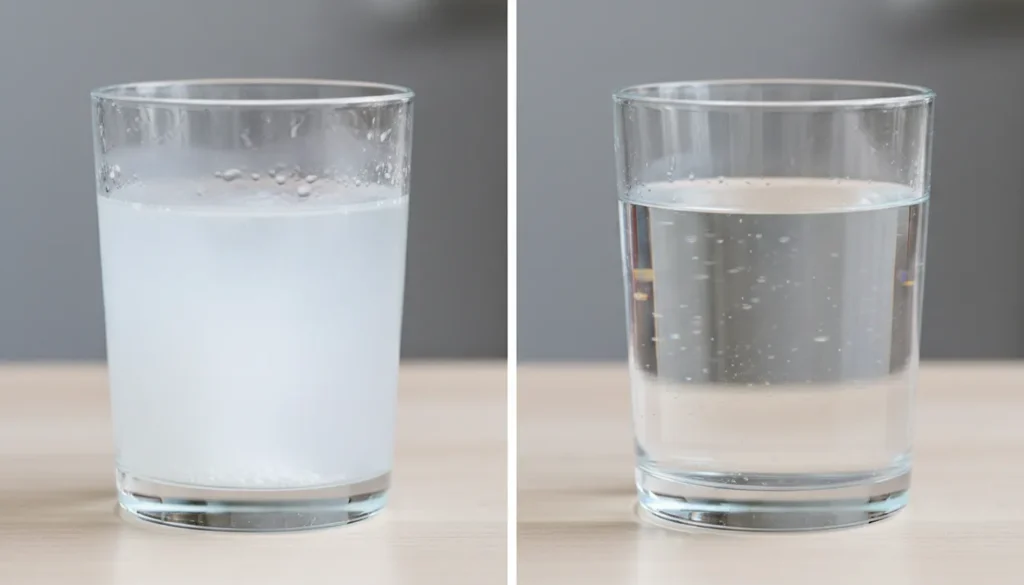
The City of San Diego’s annual Drinking Water Quality Reports show that San Diego’s water consistently measures above the WHO’s 300 mg/L TDS benchmark — often doubling or tripling it during dry months when the Colorado River share of the supply increases. This is not a health emergency, but it does mean your appliances, pipes, and taste buds deal with a significantly harder water supply than most American cities.
The specific compounds in San Diego tap water that drive homeowners to RO include chloramines (used for disinfection in place of chlorine), nitrates from agricultural runoff, trace arsenic from natural geology, and elevated calcium and magnesium that cause scale. RO removes all of these at the point of use.
For a broader look at what San Diego’s water does to household plumbing over time, see our Copper vs. PEX blog post — the same mineral load that makes filtration valuable also accelerates pipe corrosion in older homes.
How Reverse Osmosis Works: The Simple Version
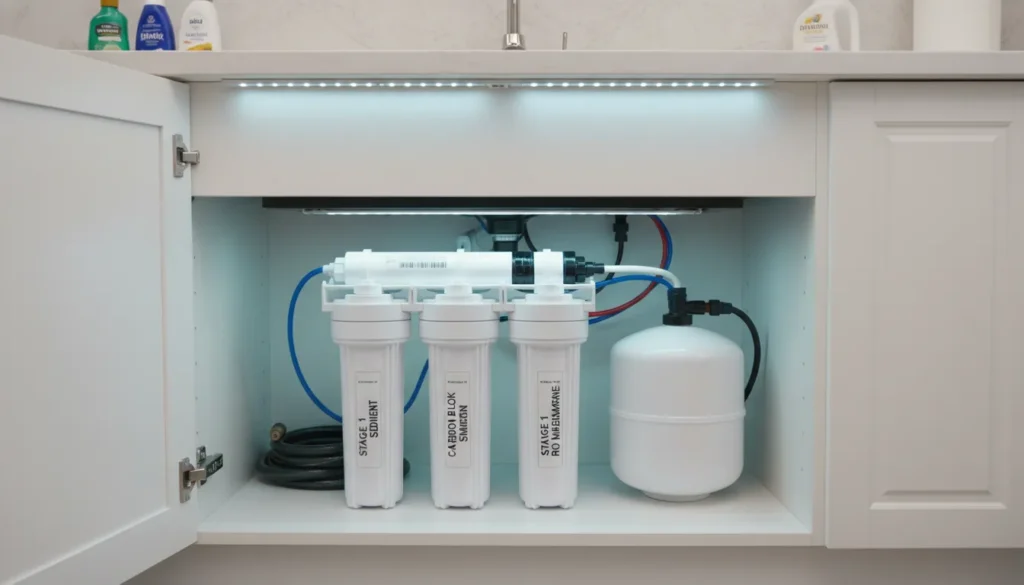
An RO system forces water through a semi-permeable membrane with pores small enough to block dissolved ions and molecules. The result is water stripped of nearly all dissolved contaminants — bacteria, heavy metals, chloramines, nitrates, and dissolved salts.
Stage 1 — Sediment Pre-Filter Removes suspended particles, dirt, rust, and sediment that would clog the RO membrane. Replaced every 6–12 months.
Stage 2 — Carbon Pre-Filter Removes chloramines, chlorine, and volatile organic compounds that damage the RO membrane and affect taste.
Stage 3 — RO Membrane The core stage. Removes 90–99% of dissolved solids, heavy metals, nitrates, arsenic, fluoride, and most biological contaminants. Lasts 2–3 years.
Stage 4 — Storage Tank Stores treated water so it is available on demand. Most under-sink systems hold 2–4 gallons. Tankless models produce water continuously at lower pressure.
Stage 5 — Carbon Post-Filter (Polishing) Final pass to remove any residual taste or odor before water reaches your glass. Replaced every 12 months.
Most residential systems produce treated water at a flow rate of 0.1 to 0.3 gallons per minute — slow enough that you always pull from the tank rather than the membrane directly. Higher-end tankless systems solve this with larger membrane surface areas.
Under-Sink vs. Whole-House RO: Which One Do You Need?
Under-Sink RO
- Treats drinking and cooking water at one faucet
- Installs under kitchen sink in 2–3 hours
- Cost: $400 – $900 installed
- Ideal for most San Diego homeowners
- Minimal water waste (modern designs)
- Dedicated faucet for filtered water
Whole-House RO
- Treats all water entering the home
- Every tap, shower, and appliance filtered
- Cost: $1,500 – $5,000+ installed
- Suited for severe water quality concerns
- Higher ongoing maintenance and filter cost
- May require a softener in combination

For the vast majority of San Diego homeowners, an under-sink RO system handles the practical need — clean, great-tasting water for drinking and cooking — at a fraction of the cost of a whole-house system. Whole-house RO is worth considering for households with specific health sensitivities, wells, or unusually high TDS readings above 1,000 mg/L.
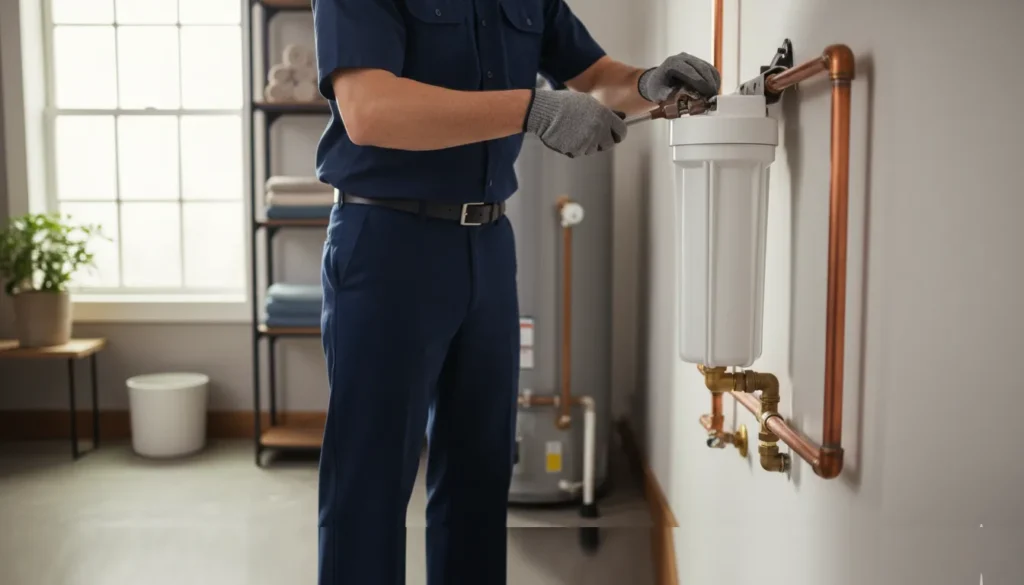
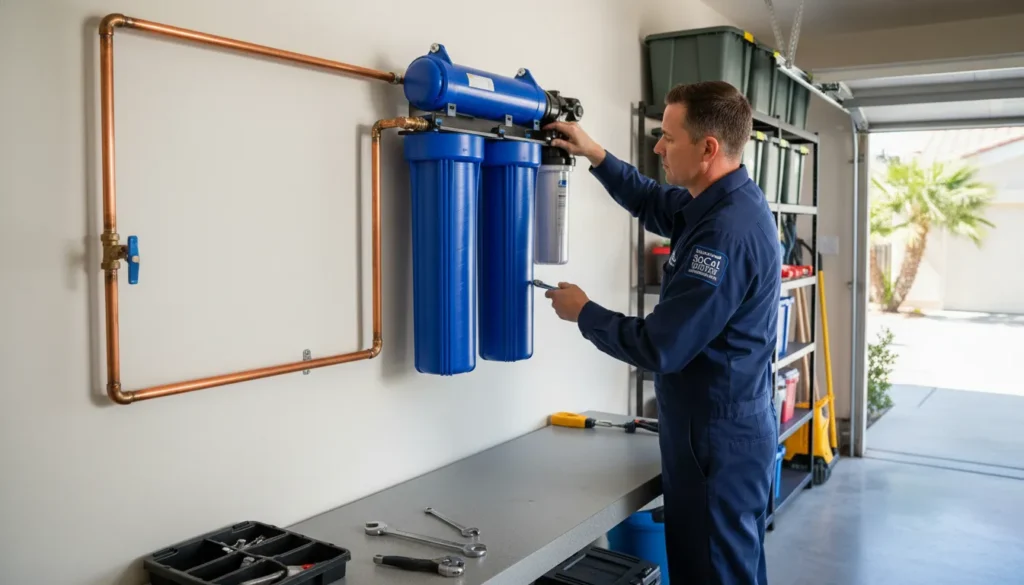
If a full under-sink RO is not what you need, explore our whole-house water filtration system installation page — a more cost-effective option that addresses scale and sediment for the entire home without the output limitations of whole-house RO.
Professional RO Installation: What to Expect
Step 1 — Site Assessment (15–20 minutes) Plumber checks under-sink cabinet space, water pressure, drain line access, and existing supply valve condition.
Step 2 — Supply Saddle Valve Installation A saddle valve taps the cold water supply line to feed the RO system. Some plumbers prefer adding a dedicated ball valve — a cleaner, longer-lasting connection method.
Step 3 — Drain Line Connection The concentrate (reject) line connects to the sink drain. Placement and angle affect how efficiently the system drains without back-siphoning.
Step 4 — Dedicated Faucet Install A dedicated RO faucet is mounted through the sink or countertop — typically in an existing soap dispenser hole. This keeps filtered water separate from the main tap.
Step 5 — System Flush and Testing First fill flushes the membrane and filters. Plumber checks for leaks at all connections and verifies water pressure at the dedicated faucet before signing off.
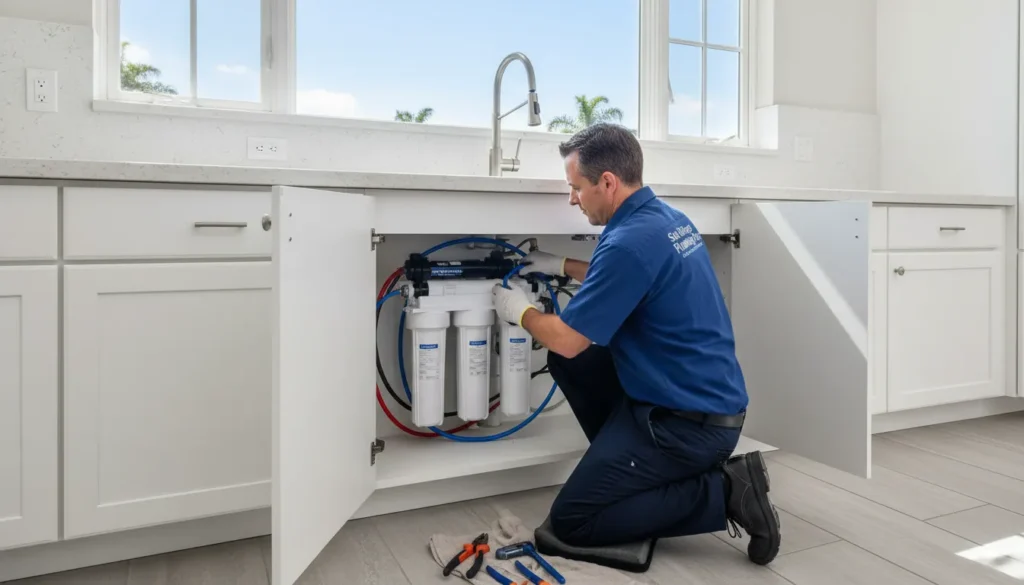
A standard under-sink RO installation takes 2 to 3 hours. Most homeowners do not need to be present throughout — just available at the start and end. The system is fully operational the same day. View our dedicated reverse osmosis installation service page for the brands and systems we recommend and install.
Reverse Osmosis Installation Cost in San Diego
| System Type | Equipment | Installation | Total Installed |
|---|---|---|---|
| Under-sink RO (standard) | $150 – $400 | $150 – $300 | $400 – $700 |
| Under-sink RO (tankless, high-flow) | $300 – $600 | $150 – $300 | $550 – $900 |
| Whole-house RO (small home) | $800 – $1,800 | $400 – $700 | $1,500 – $2,800 |
| Whole-house RO (large home) | $1,500 – $3,500 | $600 – $1,200 | $2,500 – $5,000+ |
| Annual filter replacement (under-sink) | $80 – $150/year | ||
| RO membrane replacement (2–3 years) | $60 – $150 per membrane |
Pro Tip: Pair RO with a Whole-House Filter or Softener Many San Diego homeowners pair an under-sink RO system with a whole-house water filtration system or a water softener. The whole-house filter removes scale and sediment from all water — protecting appliances and pipes — while the RO delivers premium drinking water at the kitchen tap. This combination addresses both scale buildup and drinking water quality at a combined cost lower than whole-house RO alone.
Why Professional Installation Matters
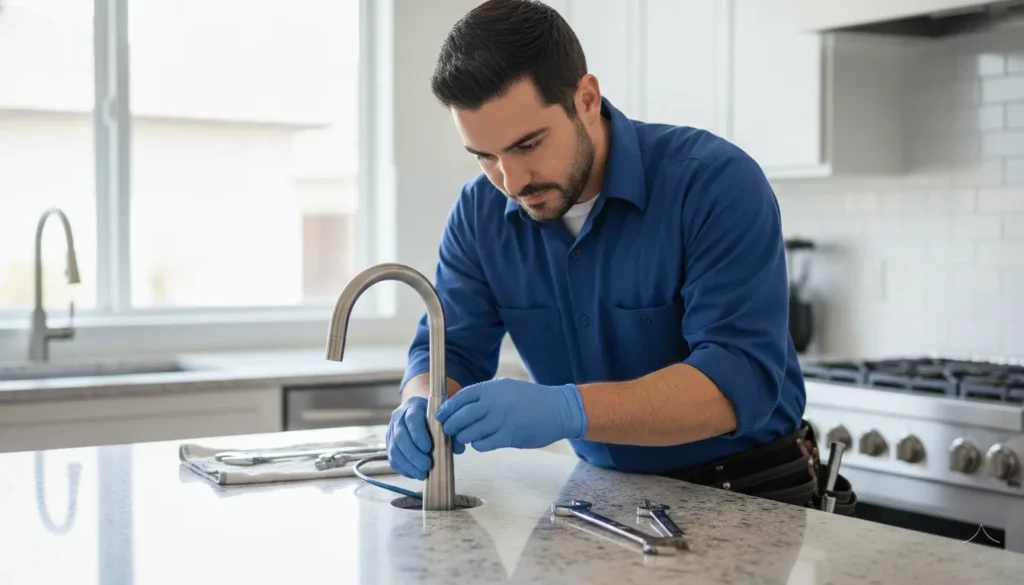
Water pressure compatibility. San Diego homes frequently have pressure above 80 psi, which accelerates membrane wear and can void manufacturer warranties. A licensed plumber confirms pressure is within range and installs a pressure-reducing valve if needed.
Drain line placement. An incorrectly placed drain line creates back-siphon conditions that pull contaminated drain water into your filtered storage tank. This is not a hypothetical — it happens with rushed DIY installs.
Warranty and permit compliance. Whole-house RO systems that tie into the main supply line may require a permit in San Diego County. The EPA’s National Primary Drinking Water Regulations provide the federal framework for what contaminants water treatment systems are designed to address — professional installation ensures your RO system is configured to meet those standards correctly. Repipe Home Hero is a C-36 licensed plumbing contractor.
Customer Review “Stefan and his team repiped our entire house and also installed a water filtration system. It was honestly the best experience we ever had with a plumbing company. The flow of information, quality of work, and attention to detail were all outstanding.” — Alexander S., San Diego homeowner ⭐⭐⭐⭐⭐
Maintenance Schedule: Real Ongoing Costs
Every 6 months: Sediment and carbon pre-filters. San Diego’s high TDS loads these faster than average — don’t stretch to 12 months if you have not done a TDS test recently. The City of San Diego’s water quality FAQ confirms that San Diego water chemistry can affect internal plumbing and filtration equipment — making regular filter maintenance especially important here.
Every 12 months: Carbon post-filter (polishing stage). This is the final stage before your glass — keep it fresh for best taste.
Every 2–3 years: RO membrane. Membrane degradation is gradual — a TDS meter test shows when output quality has dropped enough to replace.
Total annual maintenance cost for a household under-sink RO system in San Diego runs $80 to $150 per year in filters, with a membrane replacement adding $60 to $150 every 2 to 3 years. This is significantly less than bottled water spending for a family of four.
Frequently Asked Questions
Does reverse osmosis remove chloramines from San Diego water? Yes. The carbon pre-filter stage removes chloramines before they reach the RO membrane. This is important because chloramines — not chlorine — are San Diego’s primary disinfection byproduct. Standard carbon filters remove chlorine but are less effective on chloramines without the right media.
Is San Diego tap water safe without a filter? Yes, San Diego tap water meets all federal and California drinking water standards. However, compliance with safety standards does not mean the water is pleasant to drink or gentle on appliances. The high TDS, chloramine content, and mineral load are within legal limits but are reasons many homeowners pursue filtration for taste and appliance protection.
How long does RO installation take? A standard under-sink RO installation takes 2 to 3 hours. Whole-house systems take 4 to 8 hours depending on access points and existing plumbing condition.
Can RO be installed in a condo or apartment? Yes. Under-sink RO systems install inside the cabinet and do not require exterior wall access or building permits in most condo situations. Check your HOA rules regarding dedicated faucet holes if your sink doesn’t already have a spare knockout.
What is the difference between RO and a whole-house water filter? A reverse osmosis system removes dissolved solids, heavy metals, and contaminants at the molecular level — primarily for drinking water. A whole-house water filtration system filters all incoming water for sediment, chlorine, and scale — protecting pipes, water heaters, and appliances throughout the home. Both can work together for comprehensive coverage.
Do you also handle sediment filtration separately? Yes. For homes that primarily need sediment removal rather than full RO filtration, we also install sediment and water filtration systems. We help you identify the right system for your water quality concerns and handle the professional installation — we do not supply or sell systems, only install them.
Ready for Clean Water in Your San Diego Home?
We install reverse osmosis systems and water filtration solutions across San Diego County — from La Jolla and Pacific Beach to El Cajon, Chula Vista, and Carlsbad.
Schedule Your Install | Call (619) 386-0375