The sound is unmistakable — a rushing noise inside a wall, water spreading across the floor, or a sudden drop in pressure that tells you something has gone very wrong. A burst pipe is one of the most stressful emergencies a homeowner faces, and the decisions you make in the first 30 minutes directly affect how much damage your home sustains.
Do not wait for a plumber to tell you what to do. Act now, then call.
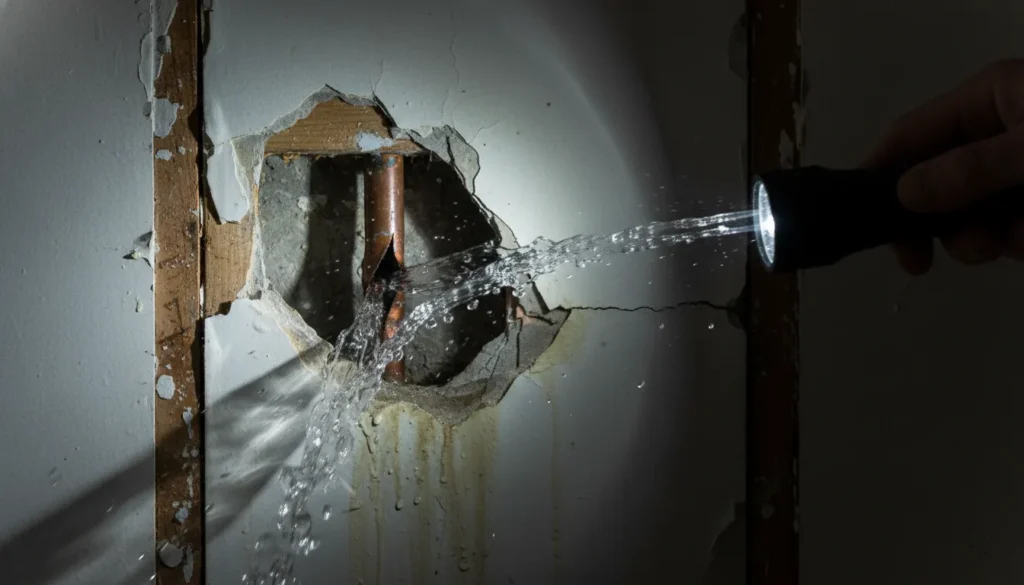
Step 1: Shut Off the Main Water Valve Immediately
This is the single most important action you can take. Stopping water flow limits damage to what has already occurred. Every minute the supply stays on, more water enters the structure.
Where is your main shutoff? In most San Diego homes, the main water shutoff is in one of three places:
- Near the front of the house close to the street, often in a concrete box embedded in the ground with a removable lid marked “Water”
- Along the exterior wall facing the street, usually near a hose bib or utility area
- Inside the garage, near the point where the main line enters the structure
Turn the valve clockwise until it stops. If you have a ball-valve shutoff, turn the handle 90 degrees so it sits perpendicular to the pipe. Water flow stops almost immediately.

If you cannot locate your shutoff or it is stuck, call your water utility’s emergency line. San Diego County Water Authority: (858) 522-6600. They can shut off at the meter.
Step 2: Minimize Damage While You Wait
Once water is off, move fast on these steps to limit secondary damage.
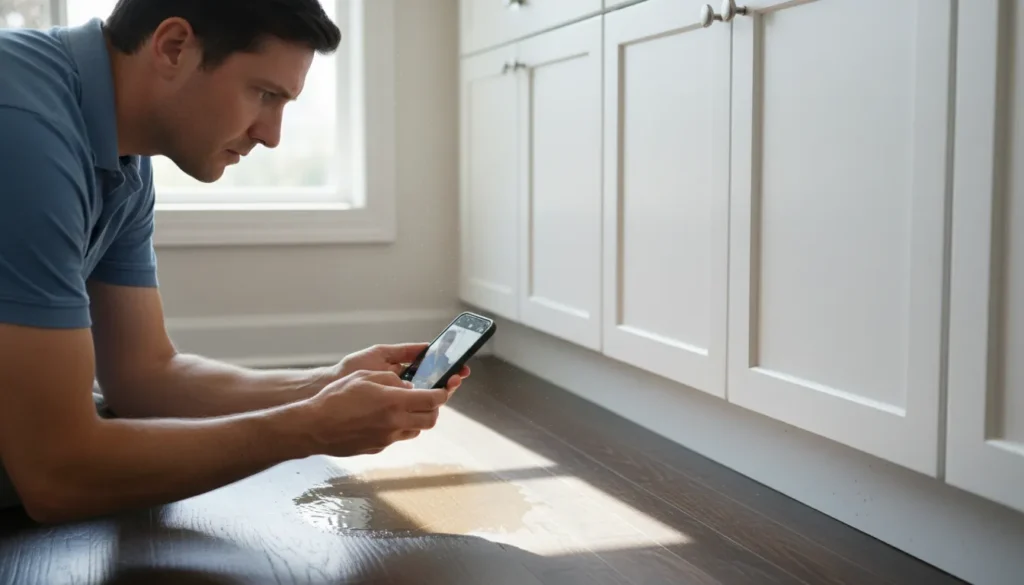
Document everything first. Before touching standing water or moving furniture, photograph the affected area. Take photos of the burst pipe, the water spread, and any visible structural damage. Your homeowner’s insurance claim will depend on this documentation.
Remove standing water. Use towels, a wet-dry vacuum, or a mop to remove water from hard floors as quickly as possible. Water that sits on hardwood floors for more than an hour begins to cause warping. Water on subfloor for more than 24 hours creates conditions for mold growth.
Move furniture and electronics. Clear the area of anything that can absorb water or be damaged by moisture. Move rugs, furniture, and electrical devices away from the affected zone.
Open windows and run fans. Increase airflow in the affected space to begin drying immediately. If you have a dehumidifier, deploy it.
Turn off electricity in affected areas. If water has reached areas near electrical outlets, appliances, or your panel, shut off the circuit breaker for those zones. Do not stand in water while doing this — use a dry surface and dry hands only.
According to the Insurance Information Institute, water damage is one of the most common and costly homeowner insurance claims in the United States, and prompt action in the first 30 minutes significantly reduces the scope of structural damage and the cost of remediation.
Common Causes of Burst Pipes in San Diego
San Diego does not face the freeze-driven burst pipe emergencies common in colder climates, but pipes burst here regularly for different reasons.
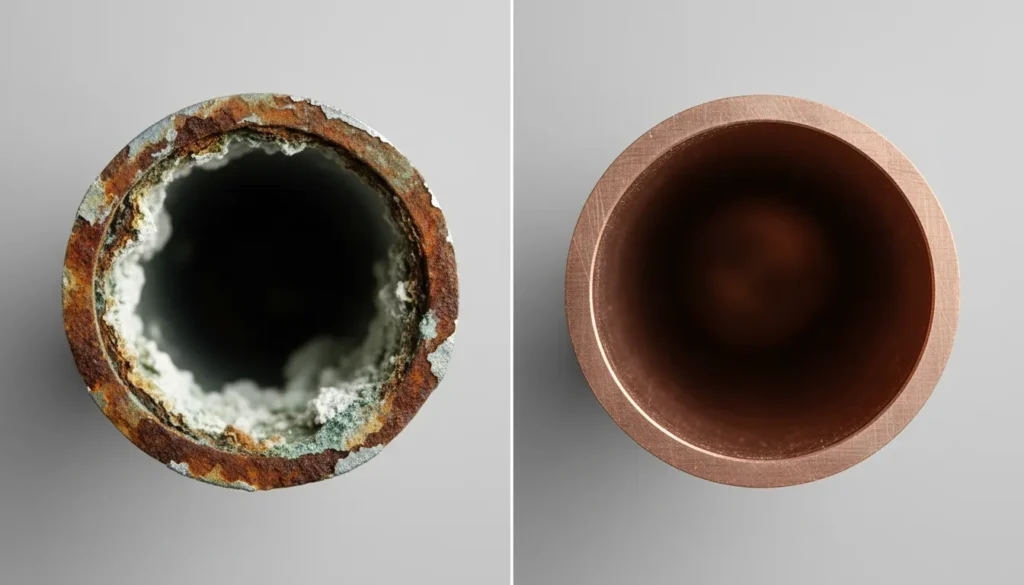
Corrosion and pipe age. The most common cause of burst pipes in San Diego is pipe material that has reached the end of its service life. Galvanized steel pipes corrode from the inside out, creating thin walls that eventually rupture. Copper pipes develop pinhole leaks that can expand suddenly. Older neighborhoods throughout San Diego frequently still have original plumbing from the 1960s and 1970s.
High water pressure. San Diego’s municipal water pressure averages 60 to 80 PSI in most areas, and some neighborhoods run higher. Residential supply lines are designed for 40 to 60 PSI. Consistent overpressure puts stress on pipe joints and fittings. If your home lacks a pressure reducing valve or the existing valve has failed, water pressure may be running well above safe levels. A pressure regulator installation can prevent pressure-driven failures going forward.
Soil movement. Clay-heavy soils in inland San Diego communities — Santee, Spring Valley, El Cajon, and parts of Chula Vista — expand and contract with seasonal rainfall. This ground movement stresses pipes buried in or running through the slab and can cause sudden joint failures.
Polybutylene pipe failure. Homes built between 1978 and 1995 in San Diego County may contain polybutylene supply lines. This material becomes brittle over time when exposed to chlorinated water and can burst suddenly with no prior warning signs.
Main line failure. A burst can originate at the main water line where it enters the structure. Main line failures often present as unexplained wet spots in the yard, a sudden spike in your water bill, or a pressure drop throughout the entire house at the same time.
Is This a Single Repair — or a Sign You Need a Repipe?
A burst pipe can be an isolated event on an otherwise sound system. But it can also be the first visible failure in a system that is failing throughout. Here is how to tell the difference.
Repipe indicators:
- The burst occurred in galvanized steel or polybutylene pipe
- Your home is more than 40 years old and has never been repiped
- You have had two or more leaks or repairs in the past two to three years
- The water at your fixtures has been discolored, low-pressure, or smelling of iron
- A plumber noted internal corrosion or mineral buildup during a prior repair
Repair-only indicators:
- The home has relatively new copper or PEX pipe installed within the past 15 to 20 years
- The burst is isolated to a single joint or fitting with no corrosion on adjacent pipe sections
- Water quality and pressure elsewhere in the home are normal
- No prior leak history
If you are unsure, the emergency plumber who responds should inspect the pipe material and condition at the burst location and advise on the state of the rest of the system. Our why repipe page covers the full list of indicators that point toward a whole house replacement.
What to Expect When an Emergency Plumber Arrives
Response time from a licensed San Diego emergency plumber typically runs 60 to 120 minutes, depending on location and time of day. Repipe Home Hero provides emergency plumbing service throughout San Diego County.
When the crew arrives, they will confirm the main is off, locate the burst, and assess the extent of the damage. They will then discuss repair options: a targeted pipe burst repair if the damage is isolated, or a full assessment for repiping if the pipe material warrants it.
For a straightforward burst, the plumber will access the pipe, cut out the damaged section, and install a replacement fitting. Copper-to-copper repairs require soldering. PEX repairs use push-fit or crimp fittings. Either way, the repair can typically be completed in two to four hours.
If the cause is high water pressure, the plumber may also recommend a pressure regulator installation to prevent future pressure-driven failures. If an emergency leak repair is needed at additional locations identified during the visit, the crew can address those on the same call.
FEMA recommends that homeowners know the location of their main water shutoff and practice accessing it before an emergency — a small step that can prevent tens of thousands of dollars in structural damage.
Emergency Burst Pipe Repair in San Diego
Repipe Home Hero responds to burst pipe emergencies throughout San Diego County, including Poway, Carlsbad, Encinitas, Escondido, Vista, and San Marcos. The team holds C-36 Plumbing License #1075463 and carries full liability insurance on every job.
If a burst pipe is sending water through your home right now, call (619) 386-0375 immediately. For non-emergency scheduling, contact Repipe Home Hero here.
Related Services:
- Pipe Burst Repair San Diego
- Emergency Plumbing San Diego
- Emergency Leak Repair
- Main Water Line Repair
- Pressure Regulator Installation
- Pipe Reroute San Diego
- Whole House Repipe San Diego
- Residential Plumbing San Diego
- Why Repipe?
- View All Services