You turn on the shower and wait. The water trickles out brown, then clears — but the pressure never comes. Sound familiar? For thousands of San Diego homeowners, that frustrating morning routine is a sign that something bigger is wrong beneath the walls. It is not a fluke. It is a failing pipe system telling you it has reached its limit.
A whole house repipe fixes the problem at its source. Not a patch. Not a temporary fix. A complete replacement that gives your home clean water and proper pressure — for decades.
What Is a Whole House Repipe?
A whole house repipe is the complete replacement of every water supply line inside your home. This means removing all the pipes that carry water from the meter to your sinks, showers, toilets, appliances, and outdoor fixtures — and installing new ones in their place.
The service covers hot and cold supply lines throughout the entire structure. It does not include drain lines or sewer pipes, which are separate systems. When the job is done, every water source in your home runs through new pipe material.
Repipe Home Hero performs whole house repipes using copper and PEX-A pipe, with all work performed under California C-36 Plumbing License #1075463. Every project includes permits pulled with the city and drywall repair after the work is finished.
Signs You Need a Whole House Repipe
San Diego’s water is notoriously hard. The county sources much of its water supply from the Colorado River, which carries high levels of dissolved minerals. That mineral content accelerates corrosion inside older pipes. Add in decades of use and the natural aging of pipe materials, and the warning signs appear faster here than in many other parts of the country.
According to the U.S. Geological Survey, hard water with elevated calcium and magnesium concentrations is a primary driver of mineral scale buildup inside residential supply pipes — a condition well documented throughout Southern California.
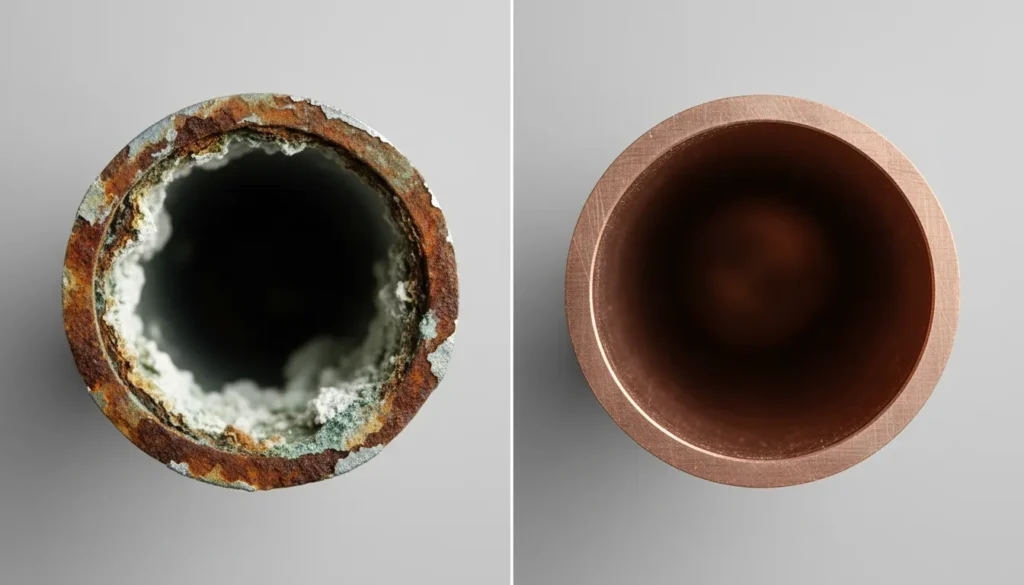
Low water pressure throughout the house. If pressure has dropped at multiple fixtures, not just one, the pipes themselves are likely the cause. Corrosion and mineral buildup narrow the inside of the pipe over time, restricting flow. A pressure regulator installation can help stabilize incoming pressure, but if internal corrosion is the root cause, the pipes need to go.
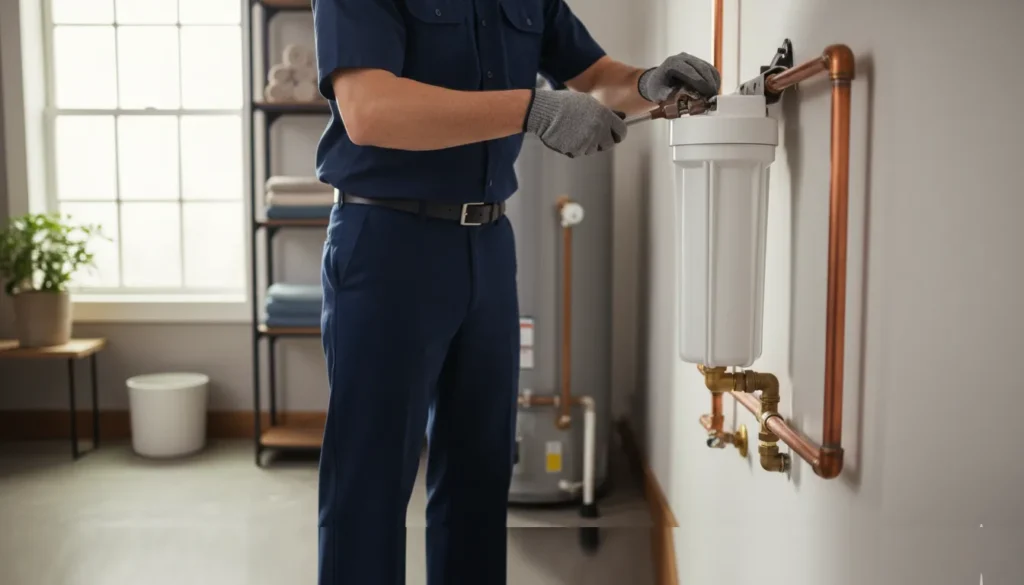
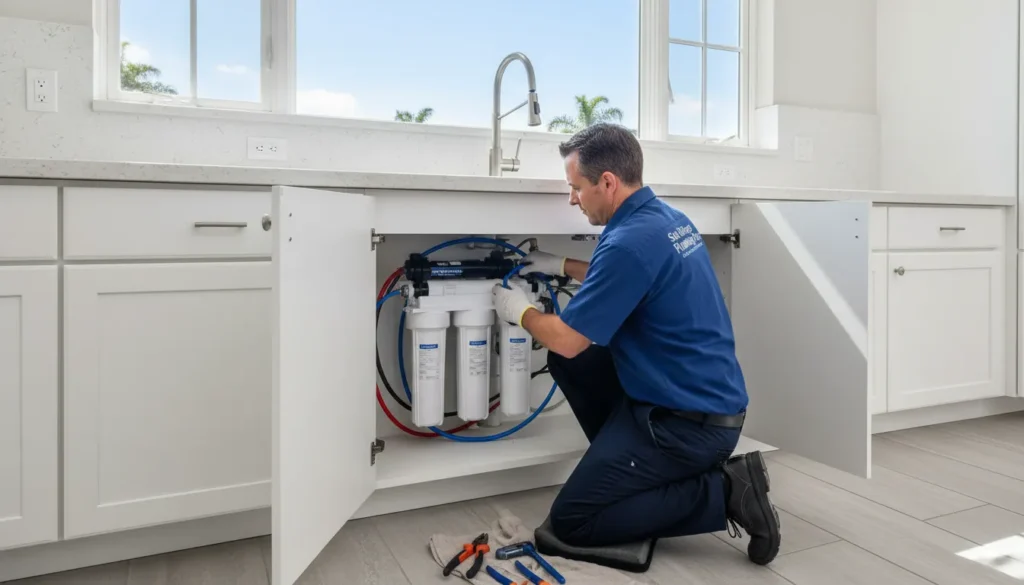
Discolored or rust-tinted water. Brown or orange water is a direct indicator of pipe corrosion. Even if the discoloration clears after a few seconds, particles are breaking loose inside your supply lines and moving through your water. A whole house water filter can improve drinking water quality in the short term, but it does not stop the corrosion at its source.
Pinhole leaks or repeated pipe failures. A single leak can be addressed with an emergency leak repair. Two or three leaks within a year or two means the pipe material has degraded systemwide. Repairing individual spots on failing pipes is a short-term solution with a long-term cost.
Pipes older than 40 years. Copper pipes installed before the 1980s used thinner gauge material and are now at or past their design life in San Diego’s hard-water environment. Galvanized steel pipes — common in homes built before 1970 — corrode from the inside out and frequently reach failure point after 40 to 50 years.
Polybutylene piping. Homes built between 1978 and 1995 may contain polybutylene, a gray plastic pipe recalled after widespread failures. If your home has polybutylene, replacement is not optional — it is a matter of time.
Main line issues. A failing main water line can also trigger pressure drops and discoloration throughout the whole house. A licensed plumber can determine whether the issue is supply-side, main-line, or both during a free assessment.
Not sure which problem you have? Our why repipe page walks through the most common indicators San Diego homeowners encounter before scheduling a repipe.
Copper vs. PEX: Which Is Right for Your San Diego Home?
Both copper and PEX are strong choices for San Diego homes. The right material depends on your home’s layout, budget, and long-term priorities.
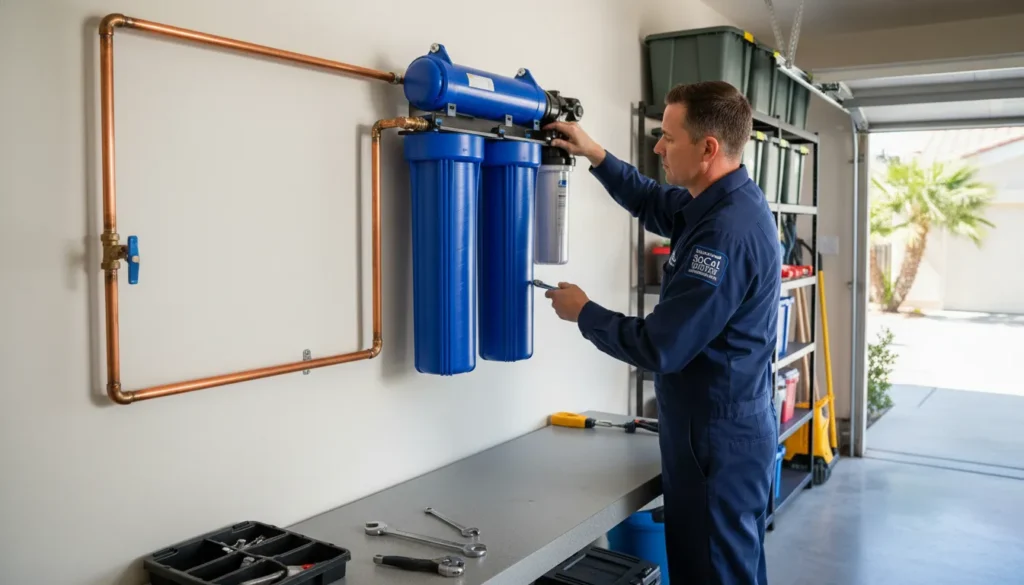
Copper pipe has a 50-plus-year track record in residential plumbing. It is rigid, naturally antimicrobial, and resists UV exposure, making it suitable for exposed runs. Copper holds its value well and is a recognized upgrade in real estate. The trade-off is cost — copper repiping is more expensive than PEX in both materials and labor, since it requires soldering at every connection.
PEX-A pipe (cross-linked polyethylene) is flexible, which reduces the number of fittings needed and allows the pipe to run longer distances without joints. Fewer joints mean fewer potential leak points. PEX-A, the highest quality grade of PEX, also resists freeze damage — relevant for San Diego homes at higher elevations. PEX repiping is typically 15 to 25 percent less expensive to install than copper.
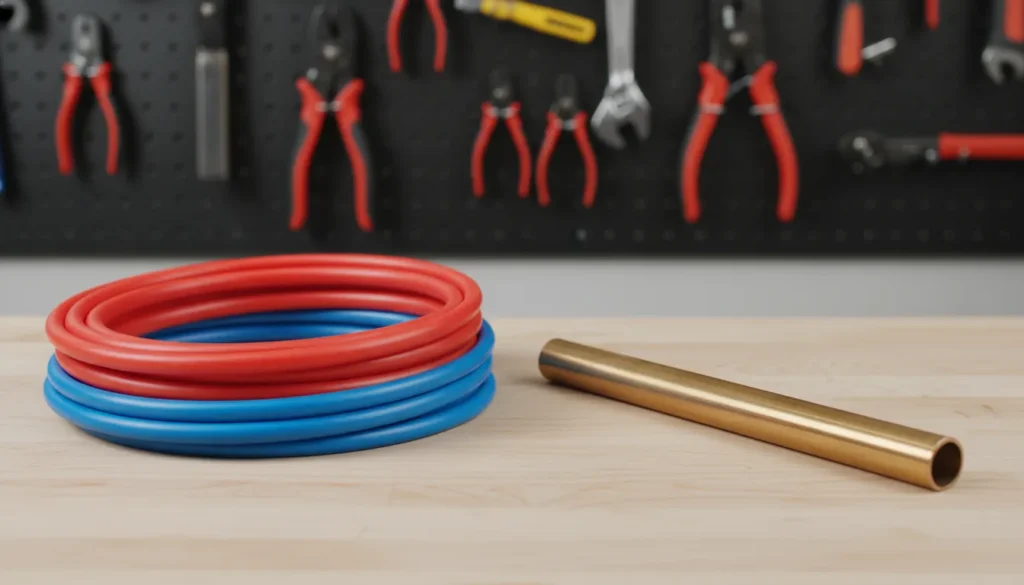
San Diego-specific consideration: The region has clay-heavy soils in inland areas like Santee, El Cajon, and Spring Valley that shift seasonally. PEX-A’s flexibility gives it a slight advantage in those environments. Copper performs well in all San Diego conditions when properly installed.
The International Association of Certified Home Inspectors recognizes both copper and PEX as acceptable residential supply pipe materials, with each carrying distinct performance profiles based on installation environment and local water chemistry.
Repipe Home Hero installs both materials and recommends based on your home’s specific needs — not a one-size approach.
What the Whole House Repipe Process Looks Like
Most homeowners have never had a repipe done and do not know what to expect. Here is a realistic picture of a typical project.
Day one: Assessment and prep. The crew inspects your home’s layout, identifies access points, and covers floors and furniture in work areas with protective materials. Water is shut off at the main.
Pipe access. Plumbers open small sections of drywall at key points — typically near each fixture and along main pipe runs. The goal is surgical access, not wholesale demolition. Experienced repipe crews minimize the number and size of openings.
Pipe removal and installation. Old pipe material comes out. New copper or PEX-A lines go in. Every connection is made and pressure-tested before walls are closed.
City inspection. San Diego County requires a permit and inspection for whole house repipe work. Repipe Home Hero pulls the permit and schedules the inspection as part of the project. This protects you legally and ensures the work meets California plumbing code.
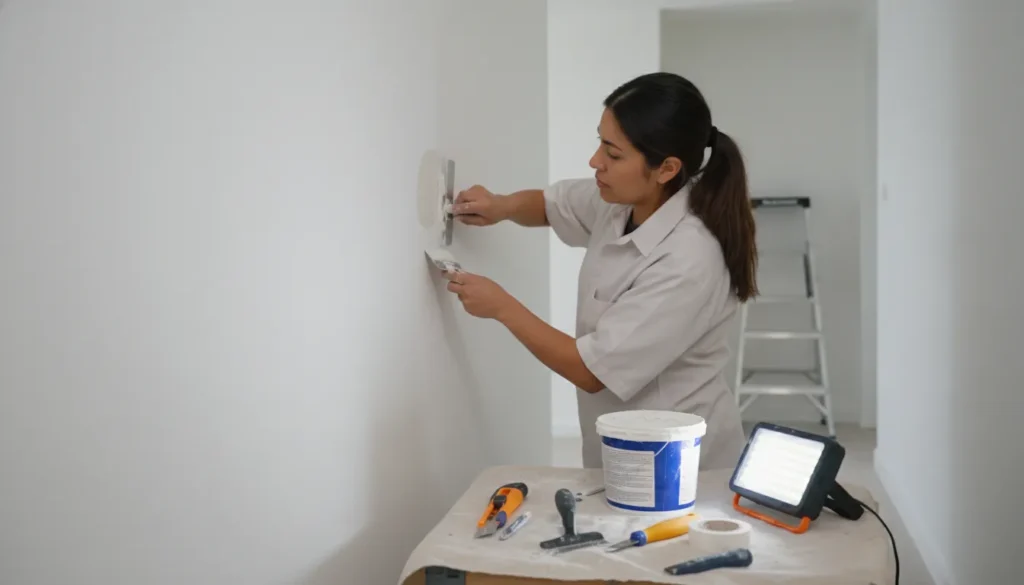
Drywall repair. After the inspection passes, the crew patches every wall opening. Repipe Home Hero includes drywall repair and texture matching in the project scope — no need to hire a separate contractor.
A typical single-family home in San Diego takes two to five days from start to finish, depending on size and complexity. Repipe Home Hero serves homeowners throughout the county, including La Jolla, Poway, Carlsbad, Encinitas, and Escondido.
Why Hire a Licensed San Diego Repiping Company
California requires a C-36 Plumbing Contractor license for whole house repipe work. This license requires passing state trade exams, maintaining insurance, and operating under a licensed qualifier. Hiring an unlicensed plumber for a repipe voids your homeowner’s insurance protection and exposes you to liability if a failure occurs after the fact.
A permitted repipe also shows up correctly on your property record. When you sell your home, buyers’ inspectors will look for evidence that plumbing work was permitted and inspected. Unpermitted work can delay a sale, reduce your sale price, or kill a transaction entirely.
Repipe Home Hero holds C-36 License #1075463, pulls permits on every project, and carries full liability insurance. Learn more about the team on our about page or review our frequently asked questions before your first call.
How Much Does a Whole House Repipe Cost in San Diego?
Whole house repipe pricing in San Diego varies based on home size, pipe material, and access difficulty. A typical single-family home runs between $4,000 and $12,000, with most 3-bedroom homes falling in the $5,000 to $8,500 range for copper and $4,000 to $7,000 for PEX-A.
Compare that to the cumulative cost of repeated plumbing repairs. A single emergency plumbing call runs $200 to $800. Two to three calls a year over a five-year period easily reaches $3,000 to $12,000 — with no end in sight and no improvement to the underlying system.
A whole house repipe is a one-time investment that eliminates the repair cycle and adds documented value to your property.
Frequently Asked Questions
How long does a whole house repipe take? Most San Diego homes take two to five days from start to finish.
Will my water be off the whole time? No. The crew restores water access each evening so you are not without running water overnight.
Does a repipe require permits in San Diego? Yes. California law requires a permit and city inspection for whole house repipe work. Repipe Home Hero handles this as part of every project.
For more answers, visit our FAQ page.
Get a Free Whole House Repipe Estimate in San Diego

If your home shows any of the warning signs above, the right next step is a free assessment from a licensed repiping specialist. Repipe Home Hero serves homeowners throughout San Diego County, from San Diego and Solana Beach to Del Mar and Vista.
Request your free estimate or call (619) 386-0375 to speak directly with the team.
Related Services:
- Whole House Repipe San Diego
- Copper Repiping San Diego
- PEX Repiping San Diego
- Pipe Reroute San Diego
- Pipe Burst Repair San Diego
- Emergency Plumbing San Diego
- Pressure Regulator Installation
- Residential Plumbing San Diego
- View All Services