Three unit owners have called the property manager this month, each with the same complaint: a leak somewhere behind a shared wall. It is not a coincidence. When one unit’s plumbing starts failing in a University City condo building, the shared risers and wall lines serving nearby units are usually not far behind.
For HOA boards and property managers, this is the moment a building-wide repiping conversation usually starts.
University City’s Density and Building Stock
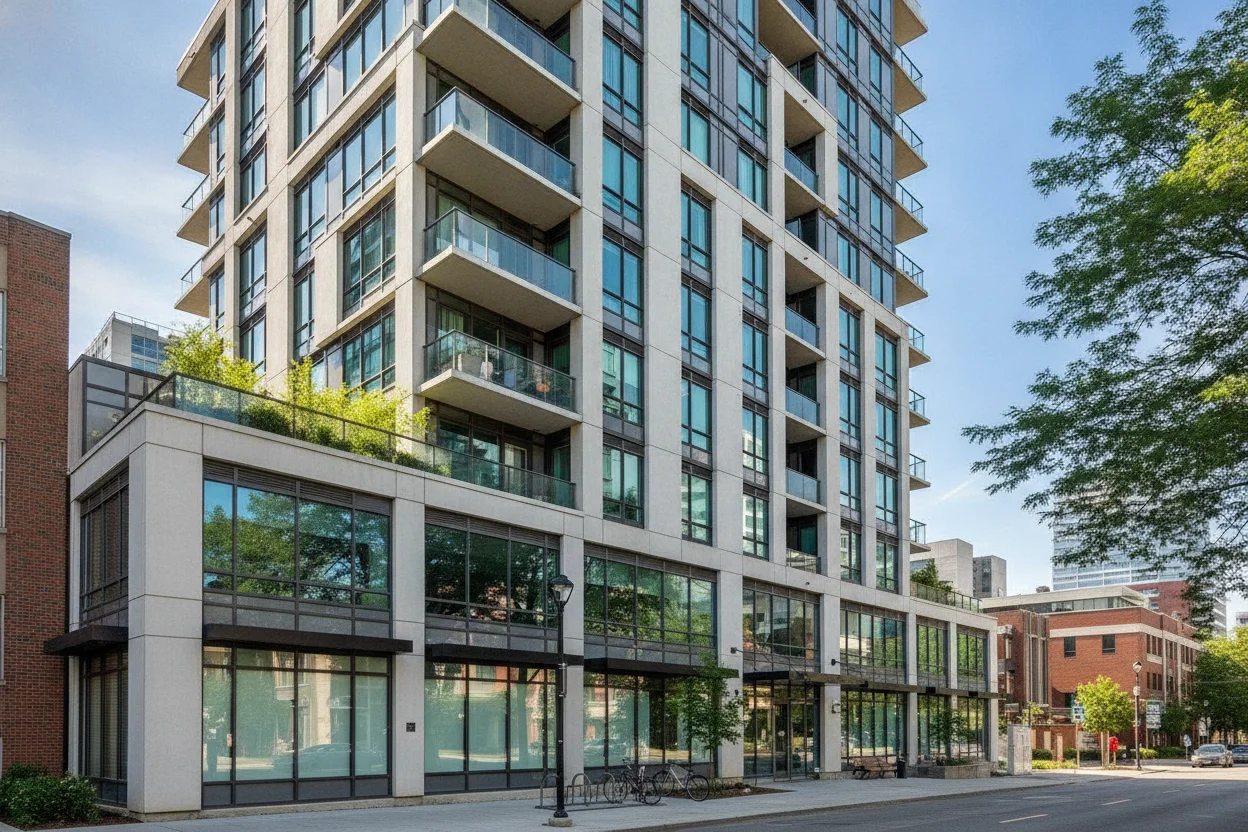
University City’s high concentration of condo and townhome buildings around the UTC corridor and near UCSD means a large share of the neighborhood’s housing shares plumbing infrastructure across multiple units. Many of these buildings were constructed decades ago with copper risers running vertically through the structure, feeding branch lines into each individual unit. That shared infrastructure is now old enough that corrosion and wear affect the whole system, not just one unit’s plumbing.
How Shared Riser and Wall Plumbing Fails Differently
A single-family home’s plumbing problem is contained to that property. In a condo or townhome building, a failing riser or a section of shared wall plumbing affects every unit connected to it.
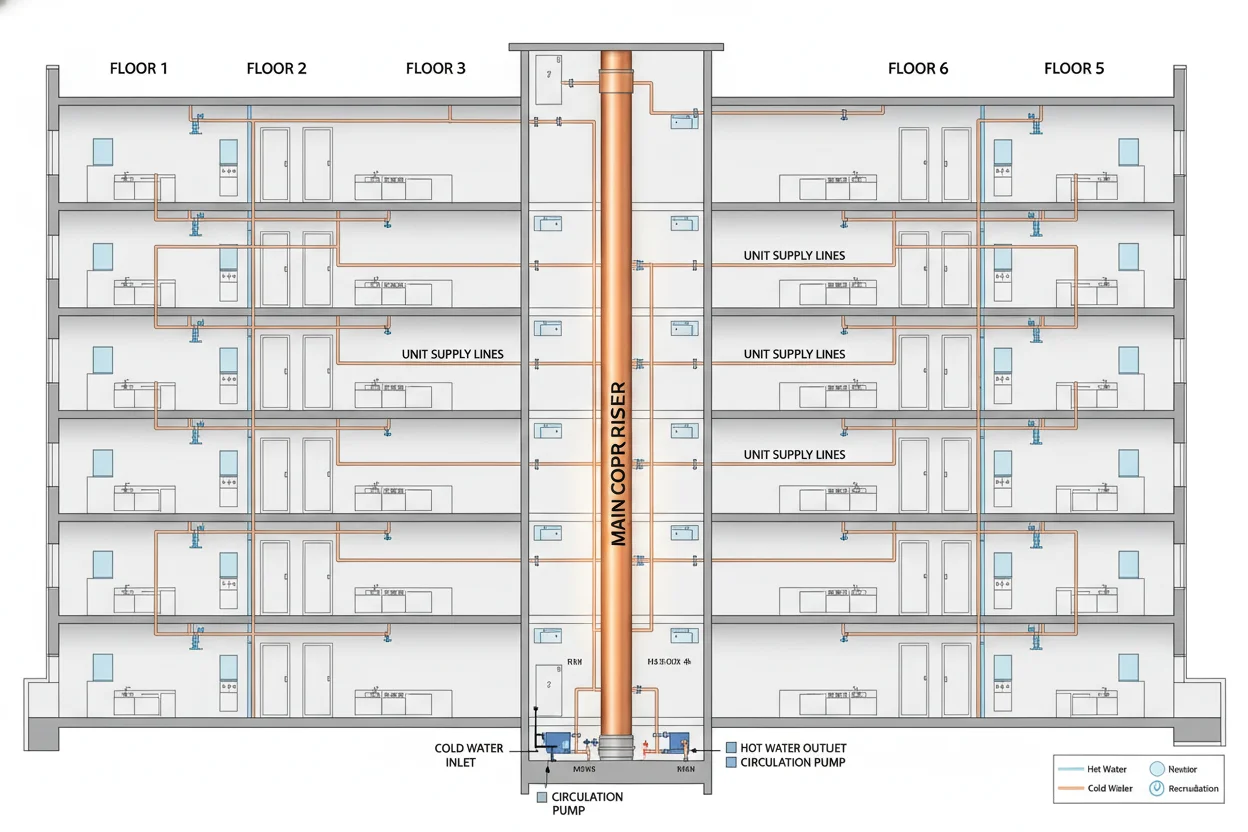
- A leak in one unit often signals a building-wide issue. Because units share the same vertical riser, corrosion severe enough to cause a leak in one unit’s branch line usually means the riser itself is reaching the same point.
- Water intrusion travels between units. A leak behind a shared wall can affect the unit below or beside the source, creating disputes over responsibility and damage that single-family homeowners never have to navigate.
- Individual unit repairs do not solve the underlying problem. Patching a leak in one unit’s branch line addresses that specific failure but leaves the riser and every other connected unit’s plumbing in the same aging condition.
- Building age often means a wave of leaks rather than a single incident. Once one unit reports a leak, HOA boards frequently see additional reports from other units within the same building over the following months.
Coordinating a Multi-Unit Repipe
A repipe across a condo or townhome building requires coordination well beyond what a single-family project involves. Repipe Home Hero works directly with HOA boards and property managers to plan a phased approach: identifying which risers and units need attention, scheduling access with residents building by building or floor by floor, and sequencing the work to minimize how many units are without water at any given time.
This typically means commercial-scale coordination applied to a residential setting: clear resident communication about scheduling, defined windows for water shutoff in each phase, and a project timeline the HOA board can share with residents in advance. Repipe Home Hero communicates directly with the board throughout the project, rather than leaving residents to piece together information from individual technicians.
Cost and Responsibility Under Your CC&Rs
Repiping cost in a multi-unit building generally runs $3,500 to $7,000 per unit, depending on the length of riser affected, the number of units on that riser, and access considerations specific to the building. A full building project’s total cost scales with unit count and the scope of shared infrastructure involved.
Responsibility for that cost typically comes down to what your building’s CC&Rs define as common area versus individually owned plumbing. In many buildings, the shared risers running through walls and between floors are treated as common area, making them an HOA responsibility, while the branch lines running to fixtures within a single unit are often the unit owner’s responsibility. This varies significantly by building, and Repipe Home Hero is not a legal advisor. HOA boards should review their specific governing documents, and where the language is unclear, consult legal counsel before finalizing how project cost is allocated.
Why University City HOA Boards Choose Repipe Home Hero
Coordinating a project across multiple units and residents requires clear, consistent communication, and Repipe Home Hero works directly with HOA boards and property managers throughout a phased project, rather than through layers of subcontracted crews with inconsistent information.
Owner Stefan Mirkov holds a California C-36 plumbing license (#1075463). Repipe Home Hero has completed more than 950 projects across San Diego County and holds over 250 five-star Google reviews, with experience extending into commercial and multi-unit plumbing work alongside standard residential repipes.
Frequently Asked Questions
Who is typically responsible for repiping cost between the HOA and individual unit owners? This depends on your building’s CC&Rs. Shared risers and common-area plumbing infrastructure are frequently classified as an HOA responsibility, while branch lines serving an individual unit’s fixtures are often the owner’s responsibility. Because this varies by building, HOA boards should review their governing documents and consult legal counsel for a definitive answer specific to their property.
How does repiping work in a University City condo building? The process typically starts with an assessment of the building’s shared risers and a review of which units are affected. From there, work is phased across the building, with resident scheduling coordinated in advance and water shutoff windows kept as short as possible for each affected section.
How much does HOA repiping typically cost? Cost generally runs $3,500 to $7,000 per unit, depending on riser length, the number of units sharing that riser, and building-specific access considerations.
How disruptive is a repipe for residents living in the building during the project? Disruption is generally limited to the specific units and floors under active work at any given time, with water shutoff windows scheduled and communicated in advance. Residents outside the current phase typically retain normal water service throughout most of the project.
Schedule a Free Building Assessment
If your University City HOA board is facing a wave of unit leak complaints, a building assessment is the right first step. Repipe Home Hero offers a free assessment for HOA boards and property managers to evaluate your building’s plumbing condition and outline a phased project plan.
Call (619) 386-0375 or request your free building assessment online today.
Learn more about our commercial repiping services, our whole house repipe process, or our commercial plumbing services. If your building’s water heaters are also due for attention, see our related guide on water heater installation for University City condos.
Repipe Home Hero also serves nearby communities including La Jolla, Pacific Beach, Carmel Valley, Rancho Peñasquitos, and Mira Mesa.