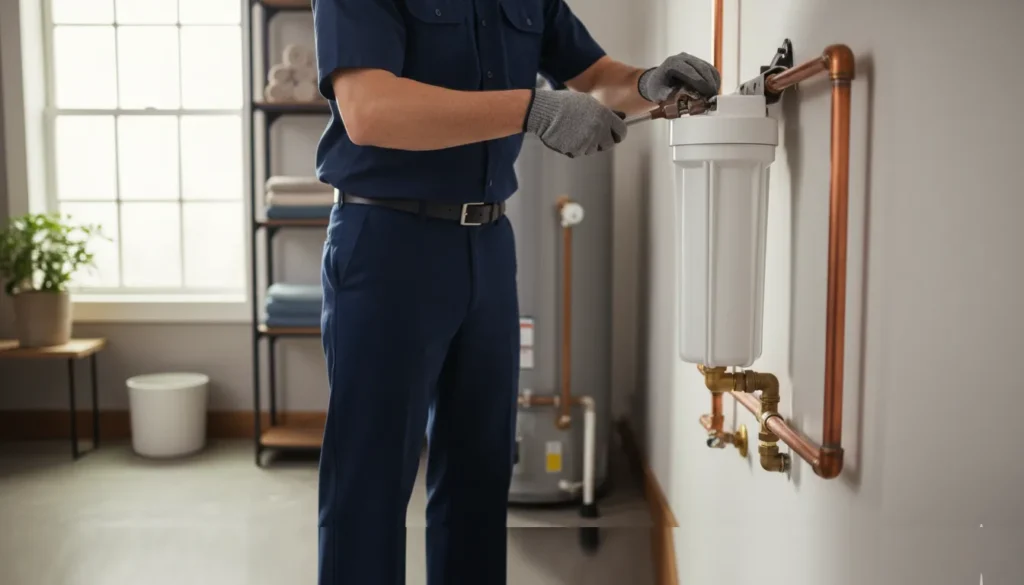
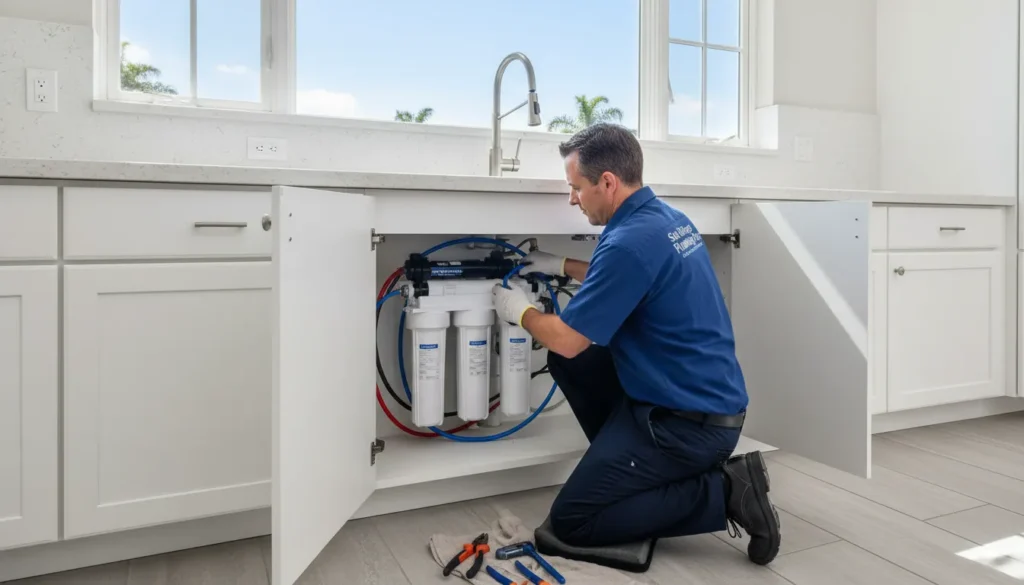
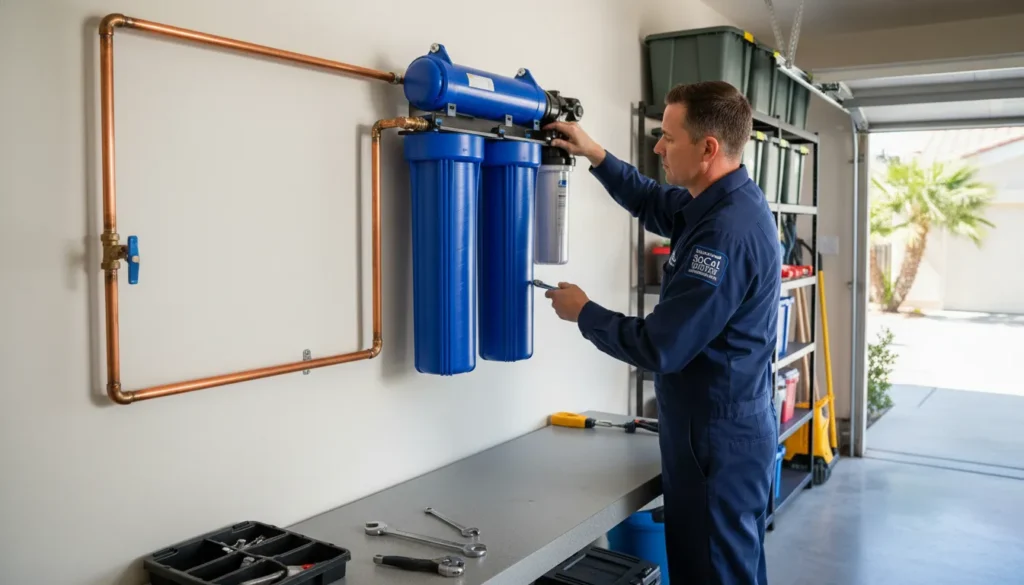
Carmel Valley homes share a recognizable profile. Most went up between 1990 and the early 2010s, part of a master-planned wave that turned the area into one of San Diego’s most desirable zip codes. Spanish-style stucco exteriors, tile roofs, and four to five bathrooms are the norm. The community plan succeeded. The plumbing inside those walls is now hitting an age most homeowners don’t see coming.
If your home in 92130 was built in the 1990s, its original copper supply lines are now 20 to 35 years old. Copper pipe has a long lifespan under normal conditions, but Carmel Valley’s water conditions are not entirely normal. The result is a wave of pinhole leaks and pressure problems showing up across the community right on schedule, the same pattern that eventually leads many homeowners to consider a whole house repipe.

Why Carmel Valley Copper Pipes Fail Earlier Than Expected
Two factors compound here in a way that doesn’t happen everywhere in San Diego County.
The first is water pressure. City supply pressure in this part of San Diego frequently runs high, and homes on multi-level lots or hillside grading can see sharper pressure swings at the fixtures furthest from the meter. Sustained high pressure stresses pipe walls and accelerates wear at joints and elbows, the same spots where pinhole leaks tend to show up first.
The second is water hardness. According to the City of San Diego Public Utilities Department’s water hardness data, the city’s municipal water carries a meaningful mineral load, and over two to three decades that mineral content thins copper pipe walls from within. This matters even more for homes built with Type M copper, the thinner-wall copper commonly used in residential construction through the 1990s. Type M was code-compliant and affordable at the time, but it has noticeably less material to wear through than the heavier Type L copper used in modern repipes. A Type M pipe carrying hard water under elevated pressure for 25 years is exactly the kind of system where a pinhole leak becomes the first of several, not a one-time event.
This combination, pressure plus hardness plus pipe age, is why Carmel Valley homeowners are seeing failures now as a community-wide pattern rather than isolated bad luck.
Signs Carmel Valley Homeowners Are Seeing
The early signs of pipe failure rarely look dramatic. They show up as small, easy-to-dismiss details until they aren’t.

Wet spots on interior walls are usually the first visible sign. A patch of drywall that stays slightly damp, or paint that starts bubbling near a baseboard, often means a slow leak inside the wall cavity.
Water stains on ceilings, particularly in homes with a second story or attic-run plumbing, point to a leak above the visible damage. By the time a stain appears, water has typically been present for a while.
Pressure drops in multi-story homes are worth paying attention to. If pressure is fine downstairs but weak upstairs, that unevenness often points to internal pipe corrosion restricting flow rather than a citywide pressure issue.
Repeated pinhole leaks in different locations is the clearest signal of all. A single leak can be a fluke. A second or third leak within a year, especially in different rooms, means the pipe material itself is reaching the end of its service life across the whole system. This is one of the clearest signs you need a repipe rather than another round of spot fixes.
If any of these sound familiar, it’s worth getting an inspection before the next leak happens somewhere less convenient, like inside a wall behind a finished closet.
Repipe Options in Carmel Valley: PEX-A vs. Copper
Once a homeowner decides a full repipe makes more sense than another round of spot repairs, the next decision is material. For Carmel Valley’s specific construction type, that decision usually comes down to PEX-A or copper.
PEX-A has become the more common choice for Carmel Valley repipes over the past several years. According to ASTM F876, the Plastics Pipe Institute’s residential PEX design guide confirms PEX intended for potable water must carry a minimum extrapolated lifetime of 50 years when tested to industry standards. It’s entirely corrosion-resistant, which removes the mineral-and-pressure failure pattern that caused the original problem. It’s also flexible enough to route through existing wall and ceiling cavities with far fewer cuts than rigid copper requires, which matters in homes with finished interiors or multi-story layouts where minimizing drywall access is a priority. Installation is also faster, keeping water shutoff windows shorter for households running multiple bathrooms.
Copper remains a strong option for homeowners prioritizing long-term resale positioning. Properly installed Type L copper, with thicker walls than the Type M copper likely already in the walls, resists the same pressure-and-hardness combination far better than what’s currently failing. Copper repipes take slightly longer due to soldered connections and typically cost more in materials, but some homeowners value the traditional plumbing material, especially in higher-value properties.
Neither option is wrong. The right call depends on how long you plan to stay in the home, how invasive you’re willing to let the project be, and your budget. A licensed plumber should walk through both options on-site rather than quoting blind, since wall configuration genuinely affects cost and timeline.
The Permit Process With the City of San Diego for 92130

A whole-house repipe in Carmel Valley requires a permit through the City of San Diego, since 92130 falls within city jurisdiction. This isn’t optional paperwork. It protects you during resale, since unpermitted major plumbing work is a common point of friction in real estate transactions.
The general sequence: your contractor submits a permit application specifying the scope of work through the City of San Diego’s Plumbing/Gas Permit portal, which covers the alteration, addition, or replacement of a plumbing system. Once approved, the work proceeds, and a city inspector visits to verify the completed repipe before the job is closed out. Reputable contractors handle this coordination as part of the job, not as an upsell.
Inspection typically checks for code-compliant materials, proper pipe support, correct fitting types, and confirmation that the work matches what was permitted. Most Carmel Valley repipes pass without issue when done by a licensed C-36 contractor, since the work itself isn’t unusual for this housing type.
What This Means for Your Carmel Valley Home
If your home falls in that 20-to-35-year window and you’re seeing any of the signs above, the math tends to favor a full repipe over chasing repairs one leak at a time. Spot-fixing a pinhole leak addresses that one failure point but does nothing for the rest of the system experiencing the same pressure and hardness exposure. Most homeowners who repair one leak end up calling again within a year or two for a different one, in a different wall.
A full repipe resets that clock. It’s a bigger project upfront, but it removes the recurring repair cycle and the property risk that comes with hidden water damage. If your slab or hillside lot is part of the picture, a pipe reroute paired with the repipe can avoid repeated concrete or yard access altogether.
If you’re in 92130 and want a straight assessment of where your home’s plumbing actually stands, visit our Carmel Valley service page or call (619) 386-0375 for a free, no-obligation estimate. We’ll walk your specific home, explain what we find, and lay out copper versus PEX-A in plain terms before you decide anything.