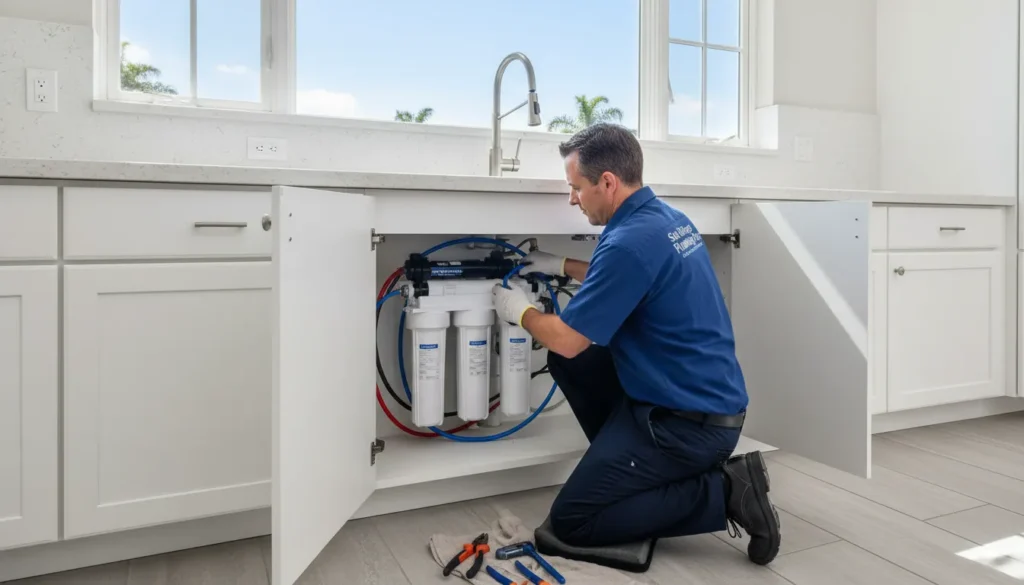
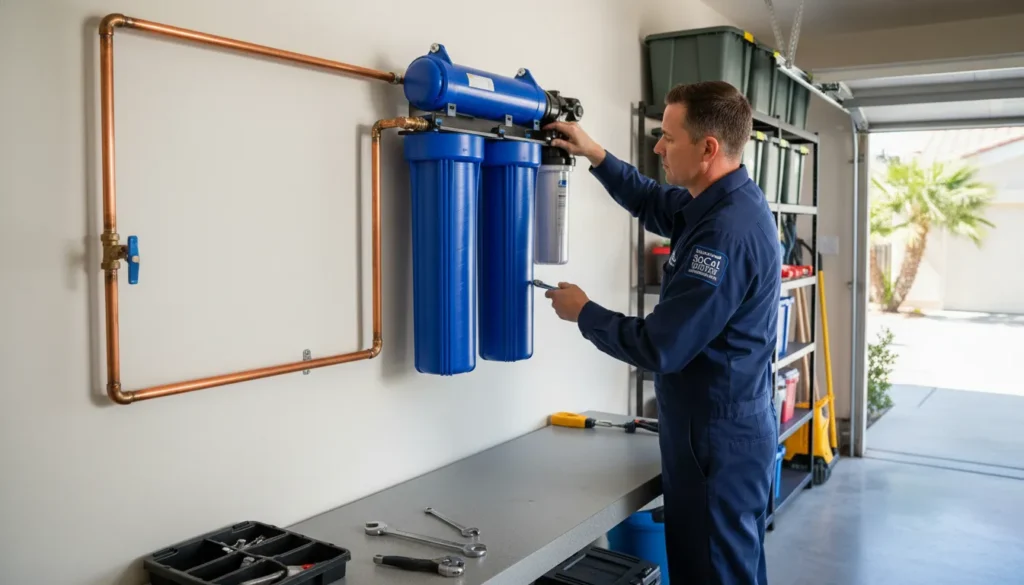
A plumber walks through your house, looks at your pipes, and says, “We’d recommend PEX for your repipe.” If your mental image of plumbing still runs on copper, that recommendation can sound like a downgrade. Plastic pipe, in a house this size? Should you be concerned?
You shouldn’t be. PEX has become the default recommendation for most whole-house repipes in San Diego not because it’s cheaper to install, though it often is, but because it solves the specific failure pattern that sends homeowners looking for a repipe in the first place: corrosion. Here’s what’s actually going on with the material, where it holds up, and where it has real limits worth knowing before you sign anything.
PEX-A vs. PEX-B vs. PEX-C: What the Letters Actually Mean
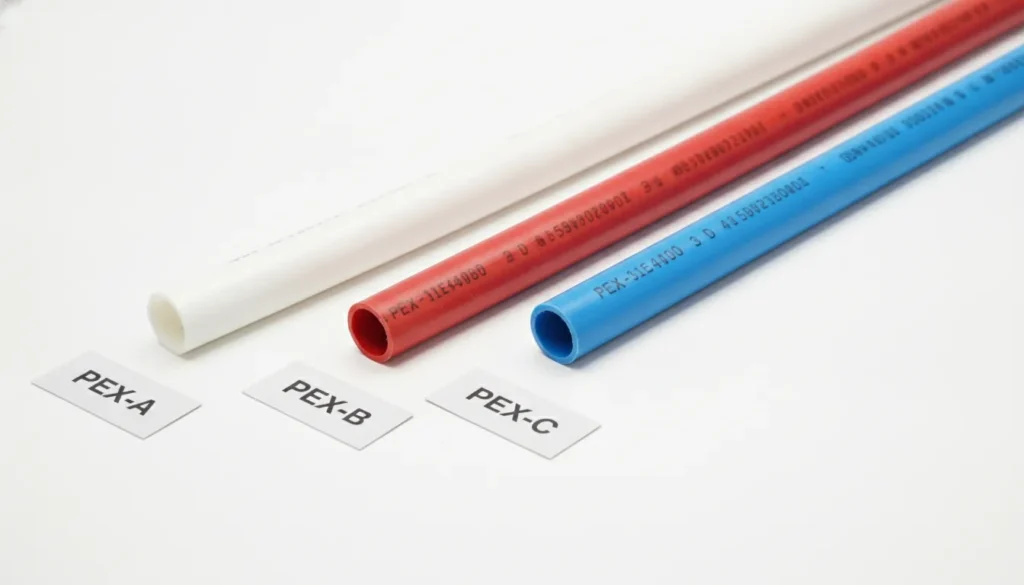
The letter after “PEX” doesn’t indicate quality tiers. It refers to the manufacturing process used to cross-link the polyethylene, and each method produces pipe with different handling characteristics.
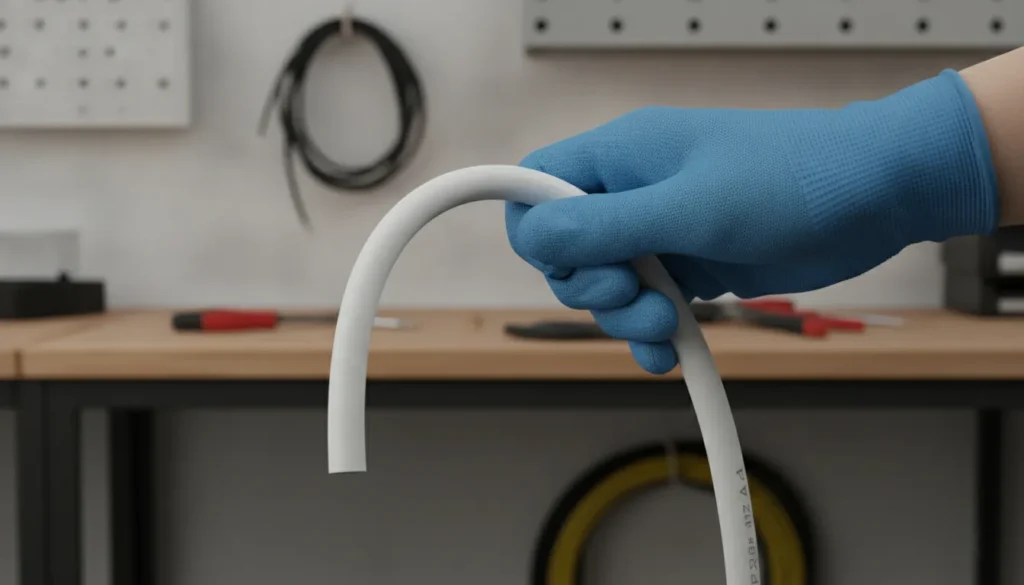
PEX-A is made using the Engel method, also called the peroxide method, where the polyethylene is cross-linked while still molten. This produces the most flexible version of PEX on the market, with strong “memory” that lets it spring back into shape after being bent, and a kink can often be repaired on-site with a heat gun rather than cutting out the section. That flexibility is also why PEX-A is the standard choice for whole-house repiping: it routes through wall cavities and ceiling joists with fewer fittings and tighter turns than the other two types allow.
PEX-B is cross-linked after extrusion using a moisture-cure process with a silane chemical agent. It’s proven and widely used, with a higher burst-pressure rating in some manufacturer testing, but it’s noticeably stiffer, with a larger minimum bend radius, and kinks generally can’t be repaired the way they can in PEX-A.
PEX-C is cross-linked using electron beam radiation after extrusion, sometimes called the “clean” method since no chemical agents are involved. It has seen less independent long-term testing in potable water applications than PEX-A and PEX-B, and at least one major manufacturer faced a class-action settlement related to premature cracking in PEX-C tubing from early oxidation. Most plumbers steer away from it for residential water supply lines.
For a whole-house repipe, PEX-A is the standard recommendation industry-wide. The flexibility translates directly into fewer connection points throughout your home, and fewer connections means fewer places where a fitting can eventually fail. If you’re weighing material options more broadly, our copper repiping page walks through the traditional alternative in the same depth.
How PEX Holds Up to San Diego’s Hard Water
San Diego’s municipal water carries a meaningful mineral load. The City of San Diego Public Utilities Department confirms the region’s water qualifies as hard, and that hardness is exactly what accelerates internal corrosion in metal pipe, particularly the thinner-wall copper common in homes built through the 1990s and early 2000s. Minerals interact with the pipe wall from the inside over decades, thinning it until a pinhole leak develops, usually at a joint or elbow where flow turns and wear concentrates.
PEX doesn’t have that failure mode at all. It’s a plastic polymer, not a metal, so there’s no electrochemical process for hard water to drive. Mineral content that would slowly corrode copper from within simply passes through PEX without interacting with the pipe wall the same way. This is the core reason PEX has held up well in independent field data going back over 25 years in municipal water systems with hardness profiles similar to San Diego’s: the failure mechanism that kills copper in this water chemistry isn’t present in PEX to begin with.
That doesn’t mean PEX is indestructible. It has its own aging profile, and the ASTM F876 standard governing PEX tubing, maintained through the Plastics Pipe Institute, requires potable-water PEX to carry a minimum extrapolated lifetime of 50 years under standardized testing. The point isn’t that PEX never wears out. It’s that it doesn’t wear out the way copper does in San Diego’s specific water conditions, which is the exact problem most whole house repipe customers are trying to solve.
PEX Installation Advantages

Beyond corrosion resistance, PEX brings practical advantages that matter during the actual repipe project, not just over the following decades.
Flexible routing means a PEX installation can often run a single continuous line from the manifold to a fixture, snaking through wall cavities and around obstructions without the multiple soldered joints a rigid copper run would require for the same path.
Fewer fittings means fewer failure points. Every connection in a plumbing system is a place where something can eventually leak. A copper repipe typically requires significantly more soldered joints than a PEX-A installation covering the same square footage, simply because copper is rigid and needs a fitting at every turn.
Faster installation follows naturally from the first two points. Fewer cuts, fewer solder joints, and more continuous runs add up to shorter project timelines, which means less time with water shut off and fewer days with contractors in the house.
PEX Limitations Worth Knowing
PEX isn’t right for every situation, and any plumber who calls it universally superior to copper with no tradeoffs isn’t giving you the full picture.
UV sensitivity is the most significant limitation. PEX degrades with prolonged sun exposure and isn’t rated for outdoor, exposed installation. Outdoor hose bib lines and exposed runs need protection, sleeving, or a different material entirely.
It’s not suited for exposed outdoor runs more broadly, beyond just UV. PEX is intended for interior, protected installations. Outdoor supply lines typically still use copper, and any pipe reroute work should account for this when planning the new path.
Local code restrictions on manifold systems can affect how a PEX repipe is designed. Some jurisdictions have specific requirements around manifold placement and accessibility. Ask your contractor how local code affects your specific installation.
What to Ask for in Writing on Your PEX Warranty
Warranty terms vary significantly between manufacturers and installers, and the paperwork matters more than the sales conversation. Get clear, written answers to these questions before committing:

What does the manufacturer warranty cover, and for how long? Many PEX manufacturers offer warranties in the 25-year range or longer, but coverage differs on whether it includes labor or just materials.
What does your contractor’s workmanship warranty cover separately from the manufacturer’s material warranty? A strong material warranty doesn’t help much if a fitting was installed incorrectly and the labor warranty is thin.
Is the warranty transferable if you sell the home? This should be documented clearly, not just mentioned verbally.
What voids the warranty? Some manufacturer warranties have specific requirements around water chemistry or installation certification. PEX fittings and installation methods must also meet the applicable ASTM and IAPMO standards referenced in the Uniform Plumbing Code, and installation outside those standards can affect warranty coverage. Get this in writing.
A reputable plumber will have these answers ready without hesitation.
The Bottom Line
PEX-A isn’t a budget compromise. It’s the material that performs best against the specific failure pattern, hard-water corrosion, that drives most San Diego repipe calls in the first place, and its flexibility genuinely simplifies installation regardless of material cost. Copper still has its place, particularly for exposed runs and certain resale considerations, but for a typical whole-house repipe in this region, PEX-A has earned its position through performance, not just price.
If you’ve been quoted PEX and want a second, no-pressure opinion on whether it’s right for your home, visit our whole house repipe page or call (619) 386-0375. We’ll walk through your home’s layout, your existing pipe material, and both options honestly before you decide.