A sink installation in San Diego falls into one of two scenarios. You are either mid-renovation and upgrading to a better fixture — swapping a basic drop-in for an undermount farmhouse sink in a Carmel Valley remodel, for example. Or something went wrong: a crack appeared in your bathroom basin, a persistent drain leak finally caused damage, and now the sink has to go whether you planned for it or not.
Both situations end in the same place: you need a licensed plumber to handle the connection work. Here is what to expect from the process, the fixture choices, and the moments when a simple sink swap reveals something bigger underneath.

Kitchen Sink Types and What Each Requires From a Plumber
Kitchen sinks come in three main mounting styles, and each carries different installation requirements.
Drop-In (Top-Mount) Sinks
Drop-in sinks sit in a countertop cutout with the rim resting on the surface. They are the most common style in San Diego homes built before 2000. Installation is straightforward: set the sink in the cutout, secure from below, connect the drain assembly and supply lines, and test.
For a simple drop-in replacement (same size, same hole pattern), a plumber typically completes the job in 1 to 2 hours. If you are changing the cutout size or switching to a different configuration — say, from a double basin to a single basin — the countertop work happens first, and the plumber handles the rough-in after. Our dedicated kitchen sink installation San Diego service covers all three mounting styles.
Undermount Sinks
Undermount sinks mount below the countertop edge and are the preferred choice in kitchen remodels in La Jolla, Rancho Santa Fe, and Carmel Valley. They create a cleaner look, make countertop cleanup easier, and pair well with stone surfaces.
The installation is more involved. Undermount sinks require countertop support brackets and silicone adhesive, which means the countertop fabricator and plumber must coordinate timing. The plumber installs the drain, tailpiece, P-trap, and supply connections once the countertop is set. First-time undermount installations in existing kitchens are best treated as half-day jobs.
Farmhouse (Apron-Front) Sinks
Farmhouse sinks are popular in Rancho Bernardo, Poway, and North County San Diego renovations where homeowners want a statement fixture. They require cabinet modifications to support the added weight and depth of the apron front. The rough cabinet opening must be sized correctly before installation, and supply line and drain connections follow once the cabinet work is complete.
The plumbing portion of a farmhouse sink installation — drain assembly, P-trap, supply connections — takes 1 to 2 hours once the sink is seated. Cabinet prep work is separate and done by a cabinetmaker or general contractor.
Bathroom Sink Types and Installation Requirements

Bathroom sinks vary widely in style, and each type has distinct rough-in requirements. For a dedicated service overview, see our bathroom sink installation San Diego page.
Vessel Sinks
Vessel sinks sit entirely on top of the vanity surface and drain through a hole in the countertop. They require a taller faucet than standard basins to account for the rim height. The drain connects directly through the counter surface to the P-trap below.
Installation involves setting the drain, sealing around the base, connecting the P-trap, and hooking up supply lines. Rough-in depth must match the vanity height and the faucet reach. A plumber confirms these measurements before the fixture is purchased if the vanity is being replaced simultaneously.
Undermount Bathroom Sinks
Undermount bathroom basins follow the same concept as kitchen undermounts: they mount below a stone or solid surface countertop. Like kitchen undermounts, they require coordinated installation with the countertop fabricator. The plumbing connections — drain body, P-trap, supply lines — go in after the counter is secured.
Pedestal Sinks
Pedestal sinks are common in older San Diego homes and in remodels that prioritize a classic or transitional aesthetic. They hide the drain and supply lines inside or behind the pedestal column, which requires the supply lines and drain to be roughed in at the correct wall height before the pedestal is installed. Retrofitting a pedestal sink in a space that previously had a vanity may require relocating supply stubs.
A plumber confirms rough-in measurements before installation: standard pedestal supply stubs sit 21 inches off the floor, and the drain rough-in should center at 24 inches from the floor and 12 to 15 inches from the side wall.
What a Professional San Diego Sink Installation Includes
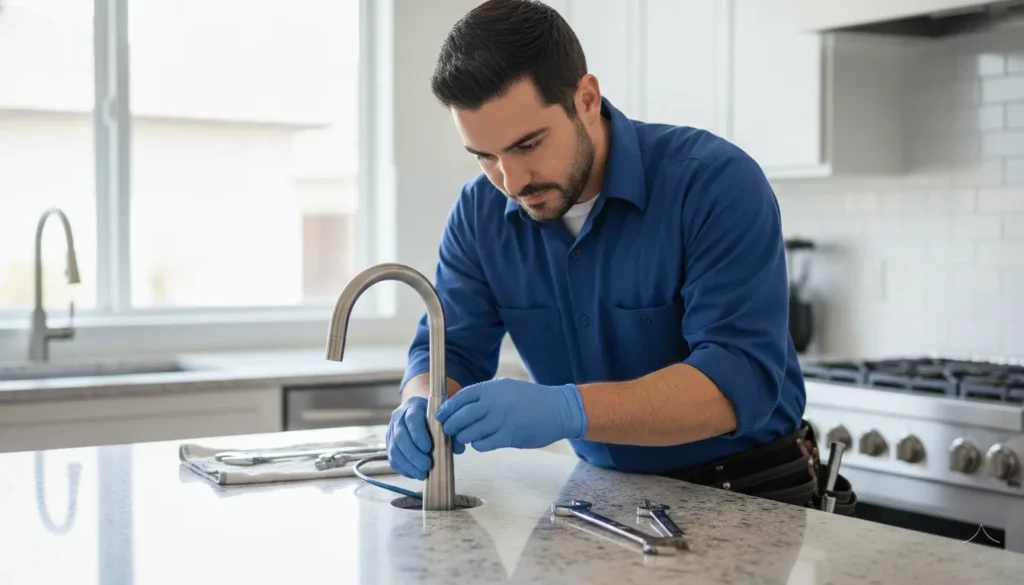
A licensed plumber handles more than just setting the fixture. A complete professional sink installation covers:
Supply line connection. The plumber connects the hot and cold supply lines from the shutoff valves to the faucet body. Supply lines should be braided stainless or reinforced flexible tubing — not the old chromed copper lines that crack after 10 to 15 years.
Drain assembly. The drain body, basket strainer (kitchen) or stopper mechanism (bathroom), and tailpiece are set and sealed properly to prevent slow leaks at the drain collar.
P-trap installation. The P-trap maintains the water seal that prevents sewer gas from entering the home. The plumber confirms the P-trap alignment with the wall drain stub and cuts or adjusts the trap arm to fit correctly. Under the California Plumbing Code (Title 24, Part 5), all drainage connections must conform to approved materials and methods.
Shutoff valve check. The plumber inspects the existing angle stops (shutoff valves) under the sink. Valves that are corroded, stiff, or leaking at the packing should be replaced during the installation rather than left in place.
Leak test. After all connections are made, the plumber runs water and visually inspects every joint, the drain basket, and the P-trap connections before calling the installation complete.
When a Sink Install Reveals Bigger Issues

Sink replacements frequently uncover problems that were invisible before the old fixture was removed.
Old angle stop valves. Shutoff valves in San Diego homes built before 1990 are often corroded or frozen in the open position. If a valve cannot close cleanly, it must be replaced. This is a 30-minute repair but one that needs to happen before the new sink is connected. If the pressure regulator serving the home is also aging, high water pressure may have accelerated wear on every valve throughout the house.
Corroded drain stubs. In homes with original galvanized or cast-iron drain pipes, the wall drain stub that accepts the P-trap may be corroded or partially blocked. A plumber can camera the drain line if flow restriction is suspected. This is especially common in older Escondido, Vista, and La Jolla homes.
Incompatible rough-in. Replacing a drop-in sink with an undermount, or a standard basin with a vessel, often requires supply and drain adjustments. Supply stubs at the wrong height, drain centers that do not align with the new sink cutout, and faucet holes in the wrong position all require correction before the new sink goes in.
Water damage in the cabinet. Old slow leaks under sinks frequently cause damage to the cabinet floor and framing. The plumber identifies this during the removal of the old sink, and any damaged wood should be addressed before the new fixture is installed. If the leak was significant, it may also be worth a call to check for pipe burst damage or emergency leak repair elsewhere in the home.
Aging supply pipes throughout the home. A sink swap in a 1970s or 1980s La Jolla or Del Mar home sometimes reveals supply lines that are original to the construction. If the pipes show visible corrosion or the water has a metallic taste, that is worth discussing with your plumber — it may indicate that a broader whole-house repipe assessment is warranted. The City of San Diego’s water hardness data shows average hardness of 276 ppm, a level that is hard on aging copper supply lines. And verifying your plumber’s C-36 license through the CSLB before any plumbing work begins ensures the work is done to code and protects you at resale.
These discoveries are not unusual in San Diego homes — they are simply part of what a thorough installation looks like. A licensed plumber identifies them, explains the options, and gives you a clear picture of the full scope before proceeding.
Ready to Schedule Your San Diego Sink Installation?

Repipe Home Hero handles kitchen and bathroom sink installations across La Jolla, Carmel Valley, Rancho Santa Fe, Poway, Encinitas, Del Mar, and all of San Diego County. The same C-36 licensed team (License #1075463) that handles repiping and water heater work also covers fixture installation — no need to coordinate multiple contractors.
Schedule your free estimate or call (619) 386-0375. You can also visit our dedicated service pages: