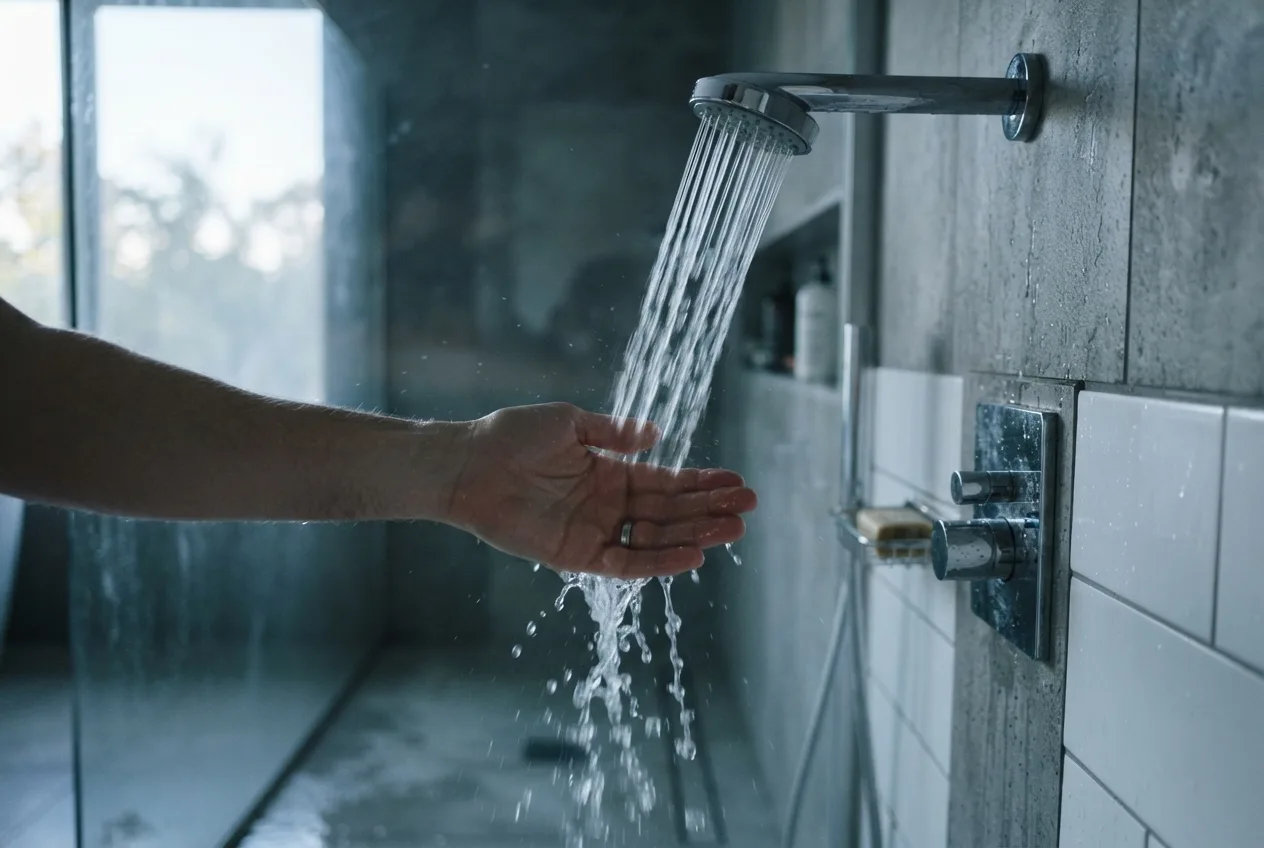
You step into the shower, turn the handle, and wait for steam that never arrives. There was no warning and no strange noise the night before, just cold water at the worst possible moment. A water heater that stops heating feels sudden, but the cause is usually one of a short list of problems, and which list applies depends on whether your unit runs on gas or electricity.
Gas or Electric: Two Different Problems
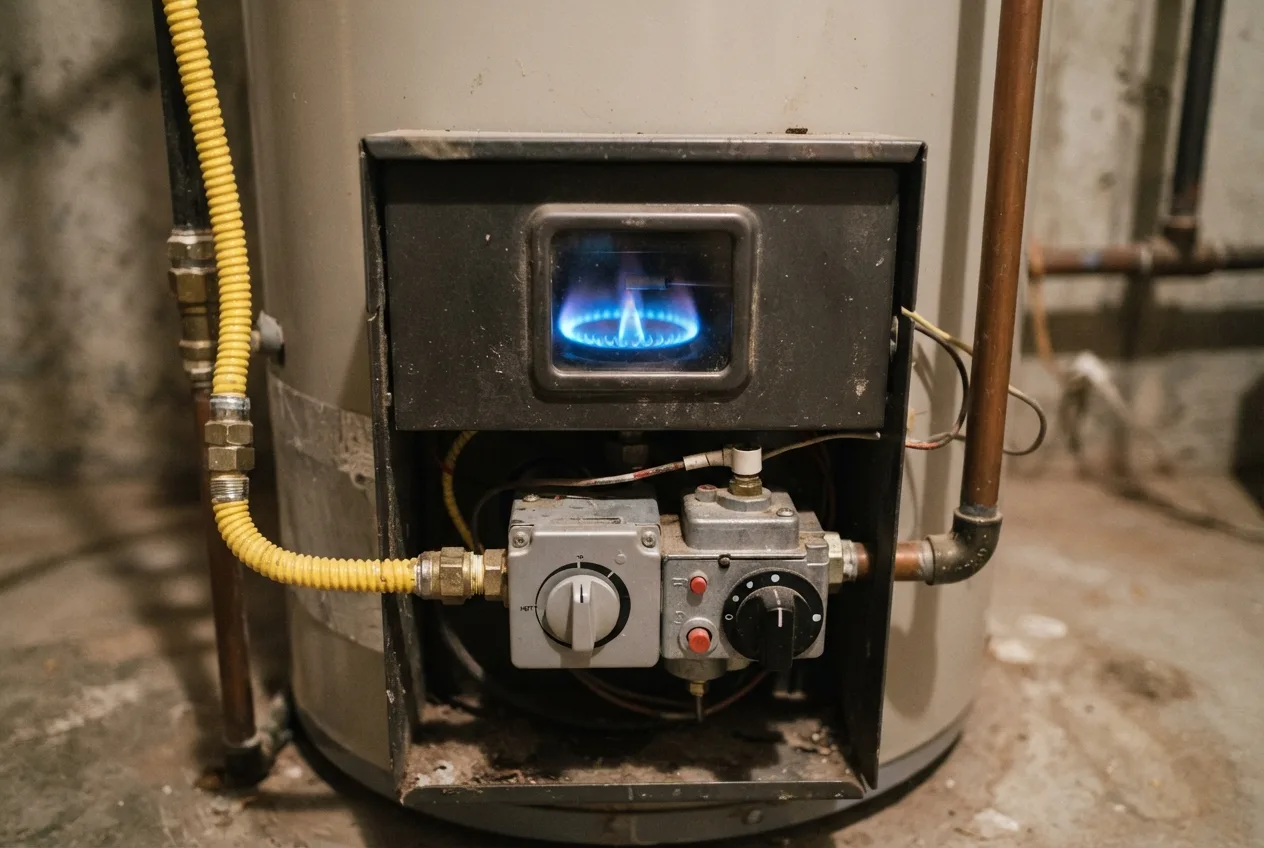
A gas water heater heats with a burner that has to ignite and stay lit, so most no-heat problems trace back to the pilot light, the ignition system, or the gas supply. An electric water heater heats with two electric elements, so most no-heat problems trace back to power, a thermostat, or a failed element. Check the label on the unit, or the fuel line feeding it, to confirm which type you have before troubleshooting anything.
Gas Water Heater Not Heating: Likely Causes
- The pilot light is out. Drafts, a gas interruption, or a worn component can blow it out. If it relights and stays on, the problem may have been temporary.
- The pilot light won’t stay lit. This usually points to a worn thermocouple or flame sensor, the safety part that senses the flame and keeps the gas valve open. A dirty pilot assembly or a draft problem can cause it too.
- A failed igniter or control board (newer units). Units with electronic ignition have no standing pilot. A failed igniter or sensor stops the burner from firing, and the unit may show a blinking error code.
- A failed gas control valve or thermostat. The valve controls gas flow to the burner. When it fails, the burner never gets gas even though everything else looks normal.
- A closed or interrupted gas supply. A shutoff valve that was turned off, or a service interruption, will stop the burner. If other gas appliances are not working either, that is a clue.
- Heavy sediment. San Diego’s hard water leaves mineral buildup at the bottom of the tank, right where the burner heats. It insulates the water from the flame, so the unit runs long and heats poorly.
Electric Water Heater Not Heating: Likely Causes
- A tripped breaker or blown fuse. The simplest cause, and worth checking first.
- A tripped high-limit reset. Overheating trips a safety switch behind the upper access panel. It is a symptom, and repeated trips mean a failing part.
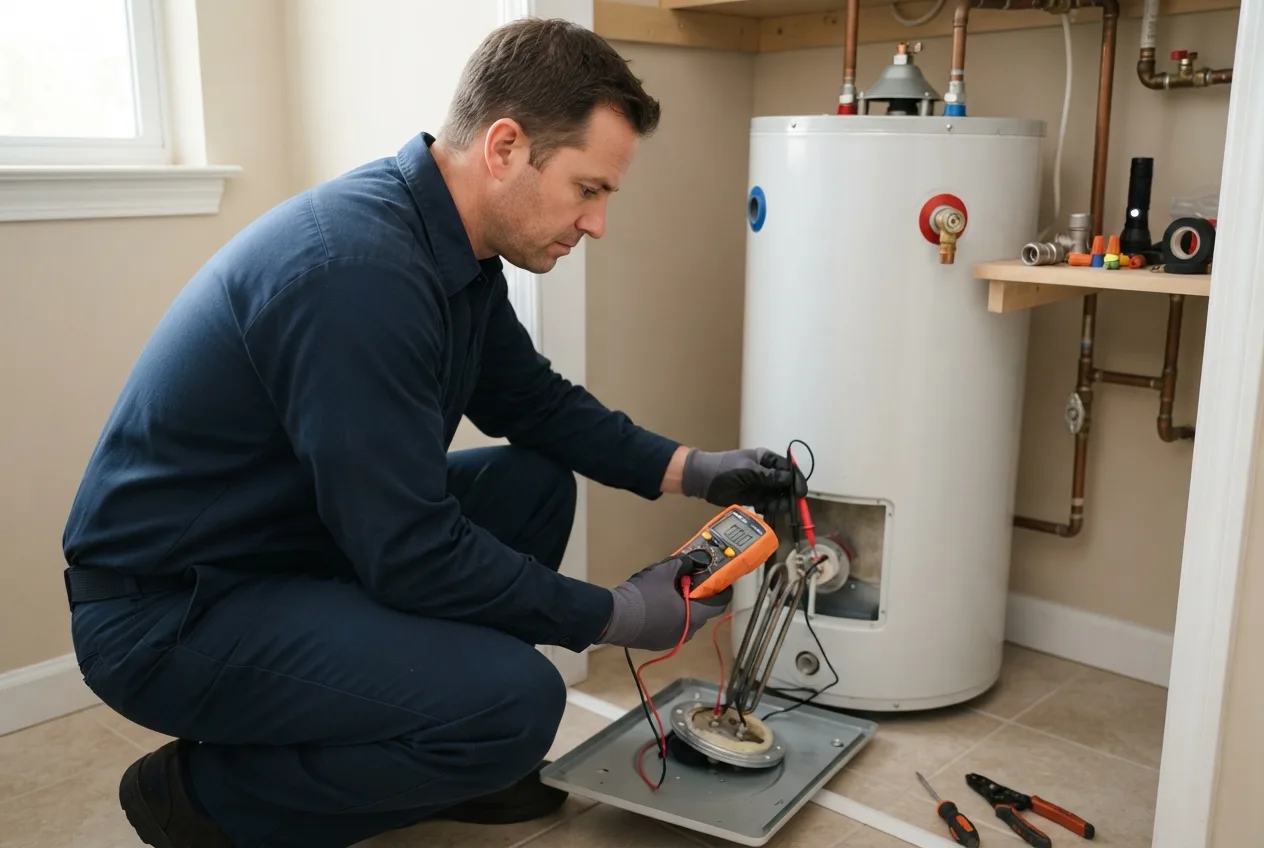
- A failed upper heating element or thermostat. If the upper element fails, the tank often produces no hot water at all.
- A failed lower heating element. Hot water runs out quickly or stays lukewarm, because only the upper part of the tank is being heated.
- Mineral buildup on the elements. Hard water scale coats the elements, makes them work harder, and shortens their life.
What You Can Safely Check Yourself
A few checks are safe for any homeowner, and they sometimes solve the problem without a service call:
- Check whether the problem affects one fixture or all of them. If only one faucet or shower is cold, the issue may be a mixing valve or cartridge, not the water heater.
- Look at the thermostat setting and confirm it has not been bumped or turned down.
- On an electric unit, check the breaker at the panel and reset it once if it has tripped.
- On a gas unit, confirm the gas shutoff valve at the unit is open, with the handle in line with the pipe, and see whether other gas appliances are working.
- On a gas unit with a standing pilot, relight it only by following the instructions printed on the unit’s label.
Stop and call a professional if you smell gas, if the pilot will not stay lit after one relight attempt, if the breaker trips again right after you reset it, or if you see rust, water, or scorching around the unit. Anything involving gas piping, the gas control valve, the burner assembly, venting, or the electrical wiring inside the unit should be handled by a licensed plumber. If you smell gas, leave the house and call 911 or your gas utility from outside, and do not turn lights or switches on or off.
Repair or Replace: When “Not Heating” Means the Unit Is Done
Many no-heat problems are inexpensive fixes: a thermocouple, a heating element, a thermostat, or a reset. Those are worth repairing when the unit is relatively young and the rest of it is in good shape.
Replacement makes more sense when the unit is around 10 years old or older, when it is leaking or rusting at the base, when the tank rumbles from heavy sediment, or when it has already needed repeated repairs. A common rule of thumb is that when a repair costs about half the price of a new unit, that money is usually better put toward a replacement. Our guide on how long a water heater really lasts and our post on the signs your water heater is failing cover the age and warning signs in more detail.
Why San Diego Homeowners Choose Repipe Home Hero
Repipe Home Hero offers same-day diagnostic visits for water heaters that are not heating. The goal of the visit is a clear answer: what failed, what it costs to fix, and a straightforward repair-or-replace recommendation, rather than a push toward a new unit when a repair makes sense.
Owner Stefan Mirkov holds a California C-36 plumbing license (#1075463), and every visit is handled by Repipe Home Hero’s own licensed crew, without subcontracted labor. Repipe Home Hero has completed more than 950 projects across San Diego County and holds over 250 five-star Google reviews.
Frequently Asked Questions
Is a pilot light that won’t stay lit dangerous to ignore? Yes, it should not be ignored. A pilot that keeps going out usually means a safety component such as the thermocouple is failing, or that the unit has a draft or venting problem. The safety valve is designed to shut off gas when the flame goes out, but relighting the pilot again and again and hoping for the best is not a fix. If you ever smell gas, leave the home and call 911 or your gas utility from outside. Otherwise, have a licensed plumber find out why the flame is not staying lit.
Why does my water heater give hot water for a few minutes and then turn cold? On an electric unit, a failed lower heating element is a common cause, since only the top of the tank is being heated. Heavy sediment, a failed thermostat, or a broken dip tube can produce the same pattern. A diagnostic visit sorts out which one it is.
Why is my water heater lukewarm instead of cold? Lukewarm water often points to a partially failed part rather than a total failure: one of two electric elements, a thermostat set too low, sediment buildup, or a dip tube problem. It is worth having checked before the remaining part fails too.
Can a water heater that is not heating be repaired the same day? Often, yes. Many fixes, such as a thermocouple, thermostat, or heating element, can be completed in the same visit when the part is available. If the unit has reached the end of its life, the visit ends with a clear replacement recommendation and quote instead.
Schedule a Same-Day Diagnostic Visit
A water heater that is not heating will not fix itself, and a cold shower is rarely the only cost of waiting. Repipe Home Hero offers same-day diagnostic visits for San Diego County homeowners.
Call (619) 386-0375 or book your same-day diagnostic visit online today.
Learn more about our gas water heater services, our water heater installation options, or our emergency plumbing service if you need help right away.